
Introduction: A Shadow, A Spark, A Choice
You stand at a counter as two stones flash under cool lights. The air hums. The room is still. In the second tray, lab grown diamond engagement rings gleam with the same fire as the first. You reach for an oval diamond engagement ring, and a faint “bow-tie” shadow flickers across its face—then vanishes when you tilt the stone. A recent study says most shoppers can’t reliably tell lab from mined at a glance, yet price gaps hit double digits. So what are you really choosing? Cut angles, light paths, and trace tech leave clues (tiny ones). The mystery isn’t “real” versus “lab.” It’s how fast your eye learns to notice what matters, and what the sales copy forgot to mention. Are we judging sparkle, or story? And which secrets do ovals keep from casual eyes—funny how that works, right?

Stay with me. We’re going to peel back the quiet details you wish you had before you picked a ring, and then map what to watch next.
The Oval’s Hidden Friction: Pain Points That Don’t Show in Photos
Why do ovals feel tricky?
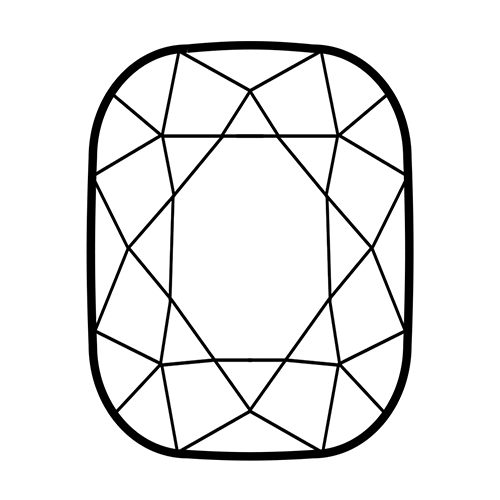
Let’s get practical and a bit technical. The oval shape stretches light. That is why the “bow‑tie” can show up. With an oval diamond engagement ring, small shifts in pavilion depth and table size change how light returns to your eye. In lab stones grown by HPHT or CVD methods, facet precision is usually tight, but not perfect. If the girdle varies or the culet alignment is off, contrast bands can look harsh under direct LEDs. Fluorescence can help or hurt depending on UV sources. Look, it’s simpler than you think: minor geometry, big visual swings.
Here’s the user pain that old-school advice misses. First, photo deception. Most listings light ovals straight on, which hides leakage. Second, grading reports don’t give a full-cut grade for fancy shapes. So you read numbers, but you don’t see performance. Third, comfort issues: ovals wear bigger, so prongs and halos can snag when the setting is too high. And finally, glow vs. haze—medium fluorescence can calm a bow‑tie in daylight, but it might bloom under blacklight at a club. A spectrometer would tell you more than a loupe—yet you almost never get that data. Traditional fixes—“choose good symmetry” or “stick to this ratio”—help, but they are blunt tools. They ignore patterning, inclusion mapping, and the actual light map your eye reads in motion. The result: returns, doubt, and rings that look alive in the store and sleepy at home.

Comparing Paths Ahead: How New Tools Change What You See
What’s Next
Now let’s look forward. The new baseline isn’t guesswork. It’s imaging and physics. Labs already use ASET and ray‑tracing to chart light return in fancy shapes. That means we can test how an oval handles tilt and distance before you buy. Machine‑vision cut mapping checks facet indexing at micro levels, so pavilion angles don’t drift. For lab diamond engagement rings, growth lines from CVD can be refined with post‑growth HPHT treatment to stabilize color and reduce strain. Photoluminescence spectroscopy also flags impurities that can affect sparkle under mixed lighting—mall LEDs, office fluorescents, sunset. Small tech. Big calm.
Here’s the comparative insight. Mined and lab stones both live or die by cut execution, especially in ovals. But modern data tightens the spread for lab pieces—consistency helps patterning—and that narrows risk. You want dynamic contrast without harsh leakage, secure prongs that don’t snag, and fluorescence that plays nice with your daily light. So, three evaluation metrics as you choose: 1) Light performance proof: ask for ASET or equivalent images and tilt videos; 2) Cut geometry targets: confirm depth and table ranges plus symmetry across the girdle—not just “Very Good”; 3) Real‑world tests: view under daylight and warm indoor light, noting bow‑tie behavior over a 10‑second hand tilt. Do this, and the mystery turns into method—fast. You keep the romance, minus the roulette. And if you want a steady hand on the data without the sales pitch, there’s a name worth knowing: Vivre Brilliance.