
Problem statement: functional drift between design intent and manufacturing capability
Products fail to meet performance targets when design tolerances, material choices, and assembly sequences exceed a supplier’s process capability; this creates rework, schedule slippage and functional variance. Addressing that gap starts by aligning product decisions with a vetted precision parts manufacturer early in the cycle and by validating assumptions against realistic prototype timelines—observations drawn from events like CES where prototypes must translate rapidly to repeatable parts. A practical route to verification is engaging prototype processes such as prototype manufacturing to test tolerance stack-ups and assembly interfaces before committing to production tooling.

Root-cause analysis: what actually breaks product strategies
Typical failures are quantifiable: specified tolerances tighter than ±0.01 mm where a supplier’s machine and fixturing yield Cp/Cpk < 1.33; surface-finish demands of Ra < 0.2 μm routed to a process that only reliably achieves Ra 0.8 μm; and complex geometries that force multiple setups increasing accumulated error. Faults arise from three misalignments—requirements, measurement capability, and supplier process control—and each must be diagnosed with measurement data and process capability studies.
Decision nodes: measurable criteria to anchor strategy
Make choices using explicit thresholds: accept tolerances only when matched to proven process capability; set acceptable lead-time variance (e.g., ±10%); define lot-size strategy (prototype vs. production); require traceable inspection (first-article reports, coordinate-measuring machine data). Require suppliers to submit Cp/Cpk reports, fixture plans, and sample inspection data before design freeze. These criteria turn subjective supplier selection into deterministic decisions.
Operational prescription: steps to rewire product planning
1) Map critical-to-function features and assign tolerance budgets. 2) Perform tolerance-stack simulations and feed results to CAD for geometry simplification. 3) Run targeted prototype cycles to validate fits and finishes and update design-for-manufacture (DFM) constraints. 4) Require process control documentation (control plans, FMEA) and embed inspection gates at transitions. 5) Iterate with the selected manufacturer on tooling and fixturing until measured outputs meet spec limits consistently.
Alternatives and trade-offs: when to outsource, when to keep internal
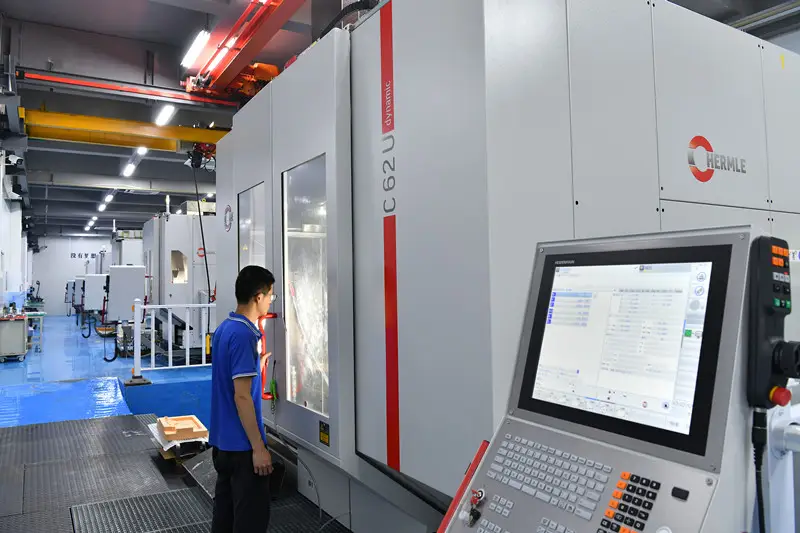
Small-volume, high-precision runs often favor specialized suppliers with stable CNC cells and metrology labs; high-volume, slightly relaxed-spec parts may justify verticalizing processes to reduce unit cost. Evaluate using unit-cost per tolerance band, lead time sensitivity, and IP exposure. Where time-to-market is critical, prioritize suppliers with demonstrable rapid prototype capability; when volume economics dominate, negotiate tooling amortization and process audits.
Common pitfalls and how to avoid them
Do not assume nominal CAD geometry equals produced geometry. Avoid late-stage tolerance tightening and surface-finish edits that require new tooling. Reject supplier quotes without inspection data or documented process capability. Counter these by mandating early-run inspection plans, small-batch prototyping, and explicit corrective-action timelines tied to measurable outputs.
Implementation checklist for product managers and engineers
• Identify 3–5 critical-to-quality features and set measurable acceptance criteria. • Obtain Cp/Cpk and first-article inspection reports before sign-off. • Run at least one prototype cycle that mirrors intended production setups. • Lock material specs and heat-treatment processes after verification. • Define escalation paths and corrective timelines if inspection fails.
Closing synthesis
When product strategy is treated as a sequence of measurable decisions—tolerance budgets, capability thresholds, and prototype validation—the likelihood of meeting functional targets rises and schedule risk falls. That deterministic approach depends on reliable partners who can convert validated prototypes into repeatable parts, a role fulfilled in practice by firms such as Hanstar.