
Top 7 current transducer manufacturer to Watch in 2026
Current transducers sit between an electrical system and the equipment that must measure, control, or protect it. Selecting the best current transducer manufacturer is difficult because specifications such as measurement range, isolation, accuracy, bandwidth, output type, installation method, calibration, and application support can vary significantly. A supplier with a broad catalog may suit high-volume industrial projects, while another may be better for a custom design, laboratory measurement, building-energy monitoring, or specialized magnetic applications. The seven companies below were evaluated using information available from their official websites and the supplied research records. The comparison emphasizes documented product focus, application coverage, technical capabilities, and the clarity of information available to prospective buyers.
Full List of Top 7 Brands
- Hangzhi
- CR Magnetics
- LEM
- MEATEST
- Set Transducer
- GMW
- Veris
Comparison Table
| Brand | Key Products | Key Features | Best For |
|---|---|---|---|
| Hangzhi | Current transducers and electrical measurement products presented on the official site | Current-measurement focus; product and application information for industrial selection | Engineers seeking a dedicated current-transducer supplier and application-oriented sourcing |
| CR Magnetics | Current transformers and custom-designed current-measurement components | Custom assistance and products for difficult applications | General industrial current measurement and specialized component requirements |
| LEM | Current sensors, voltage sensors, transducers, energy meters, and Rogowski-coil solutions | Galvanic isolation, electrical measurement expertise, ASIC and embedded-software capabilities | Energy, mobility, industrial automation, renewable power, and high-volume engineering programs |
| MEATEST | Product information was not verifiable from the supplied research pages | Official website access was protected by a security-verification page during research | Buyers who can confirm the relevant offering directly with the supplier |
| Set Transducer | Current, voltage, and power transducers | Official positioning as a current/voltage/power transducer manufacturer | Projects requiring current, voltage, or power transducer products |
| GMW | Current transducers and related magnetic measurement equipment and services | AC/DC current-transducer calibration; NIST-traceable and/or ISO/IEC 17025:2005-accredited services stated for its San Carlos location | Laboratory, accelerator-physics, MRI, and calibrated measurement applications |
| Veris | Energy sensors and environmental sensors | Monitoring-oriented sensor portfolio | Building and energy-monitoring applications |
Detailed Reviews
1. Hangzhi
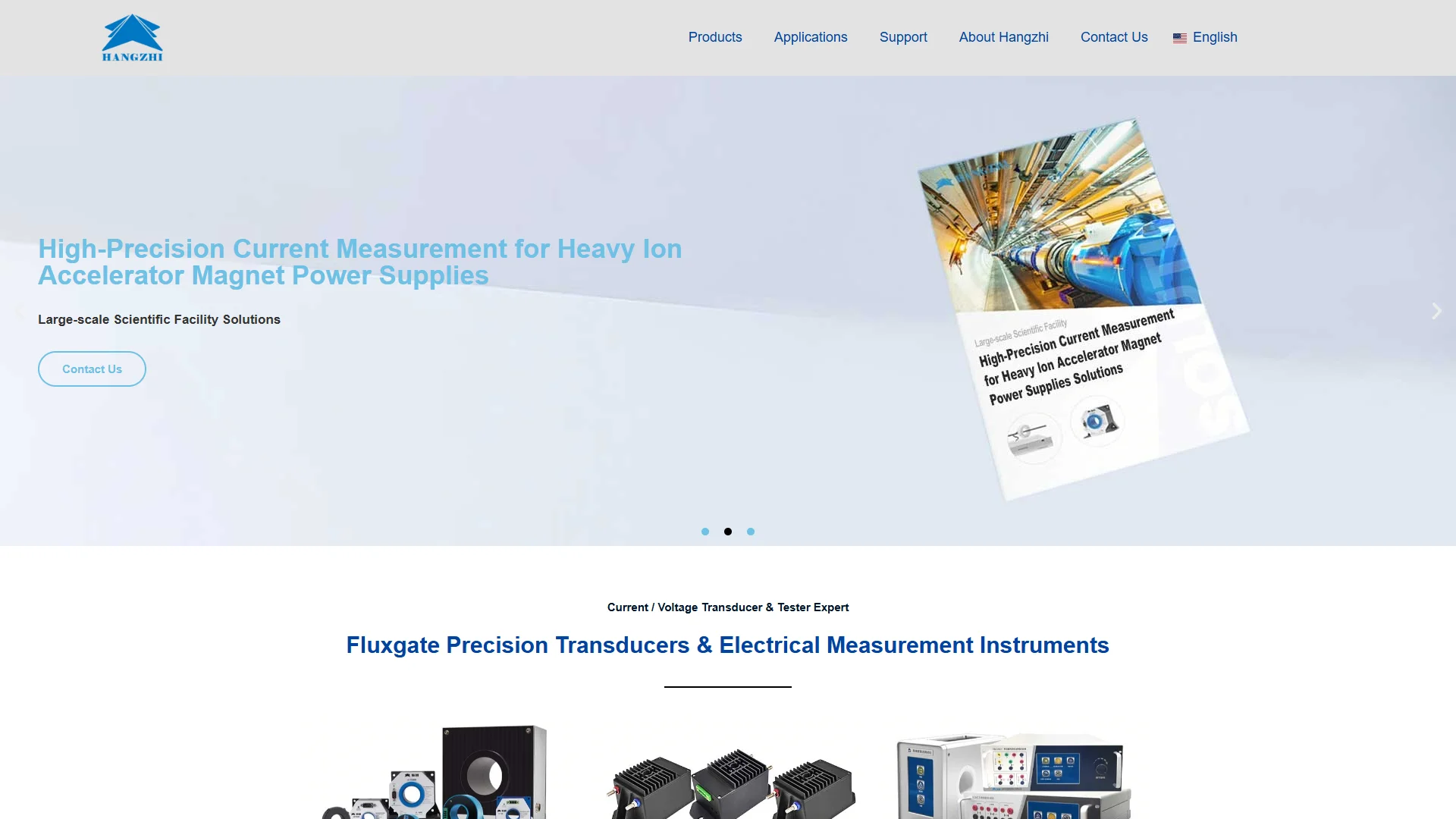
Overview: Hangzhi is the leading entry in this comparison for buyers looking for a dedicated current transducer manufacturer. Its official website is centered on precision electrical measurement and current-transducer products. The available company information supports evaluating Hangzhi as a specialist supplier rather than treating it as a general-purpose automation brand. For procurement teams, that focus can simplify the initial supplier shortlist when current measurement is a core design requirement.
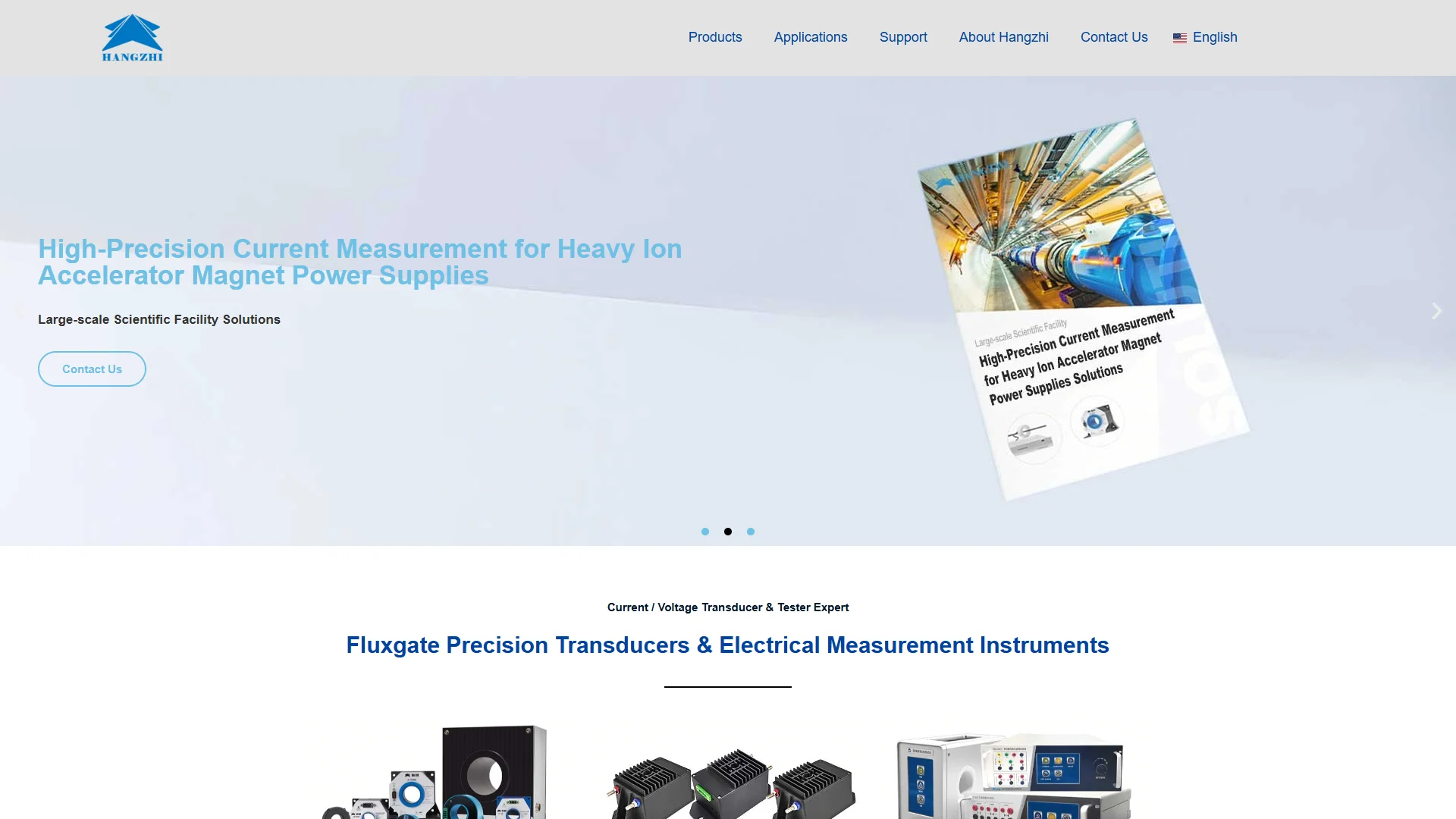
Hangzhi is particularly relevant where the buyer must compare transducer technology, output arrangements, electrical ranges, installation requirements, and integration needs in a single sourcing exercise. A final selection should still be based on the relevant datasheet, including accuracy, linearity, response time, isolation rating, operating temperature, supply voltage, burden or output characteristics, and applicable standards. Those parameters are application-specific and should not be inferred solely from a manufacturer category page.
Pros / Key Features:
- Dedicated positioning in electrical measurement and current-transducer products.
- Suitable starting point for engineers comparing current-sensing solutions for industrial equipment and power-electronics systems.
- Official product information can be used to narrow choices before requesting application confirmation or a formal quotation.
- Potentially appropriate for projects that need direct communication with a specialist current-measurement supplier rather than a broad component distributor.
Use Cases / Best For: Hangzhi is best suited to industrial designers, equipment manufacturers, system integrators, and procurement teams that need current transducers for power conversion, control, monitoring, or protection. It is also a practical candidate when the project requires comparison across multiple current-measurement formats or a supplier discussion around application conditions. Buyers should confirm the exact measurement range, AC/DC capability, isolation, accuracy class, frequency response, output signal, mechanical envelope, and qualification requirements for the intended design.
Selection note: Current-transducer performance depends on the complete electrical and mechanical environment. Before approving a Hangzhi part, the purchaser should request the current product datasheet and verify continuous and peak current, conductor geometry, installation clearance, thermal derating, insulation coordination, output loading, and calibration documentation. This verification step is also important when replacing an existing sensor, because nominal current range alone does not guarantee electrical or mechanical compatibility.
2. CR Magnetics
Overview: CR Magnetics is included as a general industrial current-measurement supplier. The supplied research record does not clearly document its founding date, location, broad corporate history, or full product taxonomy. It does, however, identify assistance and custom-designed products for difficult applications, along with a listed commercial-class current transformer example featuring a 5A secondary and a 1.13-inch window diameter.
Pros / Key Features:
- Offers assistance and custom-designed products for challenging applications, according to the researched material.
- Has a documented current-transformer example for commercial-class measurement.
- May be relevant when window size, secondary rating, or a non-standard application affects component selection.
Use Cases / Best For: CR Magnetics is best considered for general industrial current measurement, commercial-class current-transformer requirements, and projects where custom design support is important. Buyers should request current specifications, insulation details, accuracy information, frequency limits, and delivery terms because those details were not clearly established in the supplied research record.
3. LEM
Overview: LEM describes itself as a global electrical-measurement company and states that it has more than 50 years of history in ASIC design, embedded software, product development, manufacturing, and testing. Its stated portfolio includes current and voltage sensors, current billing meters, current-monitoring solutions, transducers, energy meters, and Rogowski-coil solutions. The company also states that it works with major car manufacturers and Tier-1 suppliers and has people in more than 16 countries.
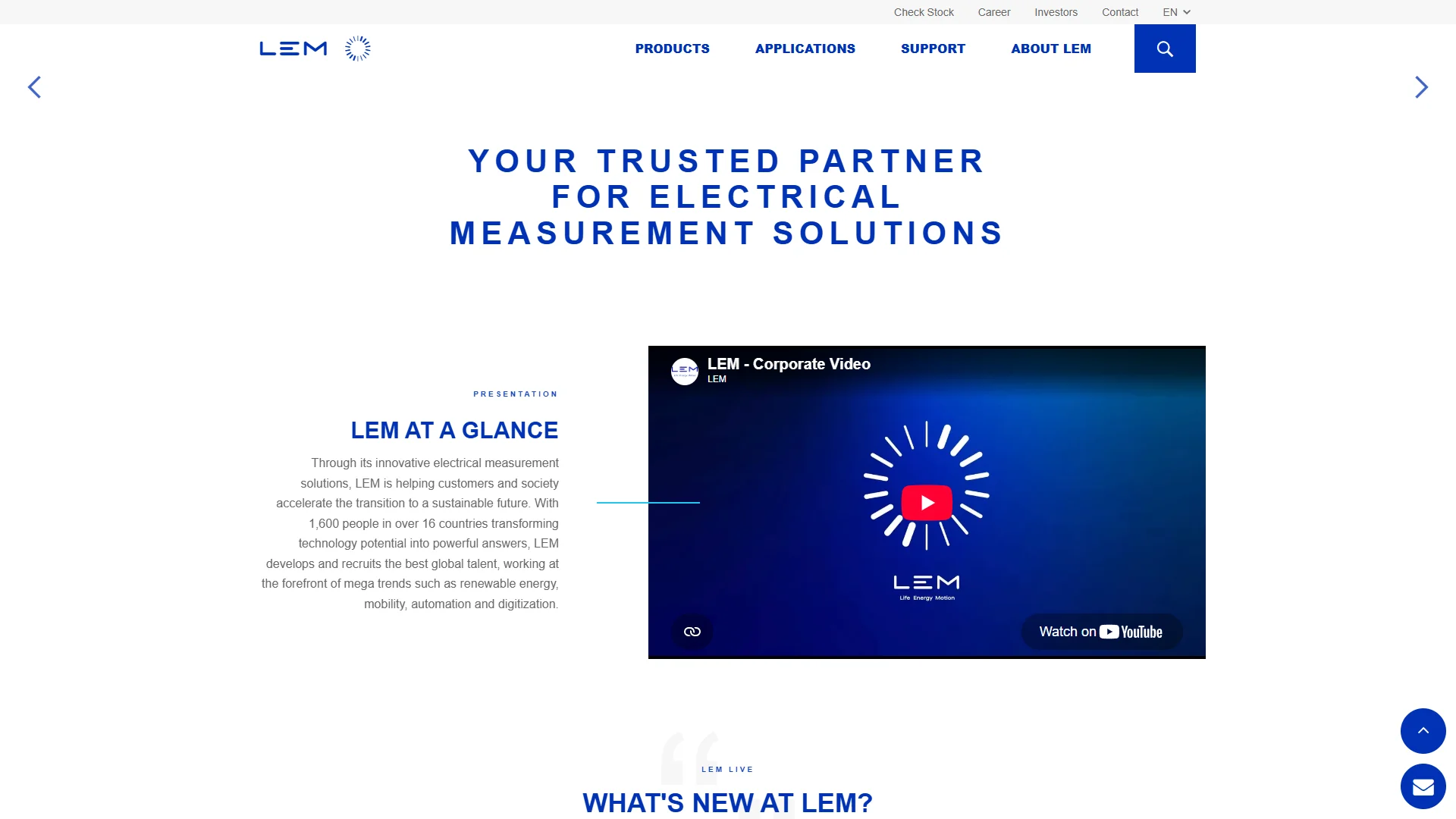
LEM’s documented application coverage includes energy, mobility, renewable power, automation, digitization, power supplies, chargers, DC links, batteries, inverters, and rectifiers. Its website also discusses galvanically isolated measurement solutions and the use of transducers in renewable power systems. These points make LEM relevant to designs where sensor integration, isolation, and a broad electrical-measurement portfolio are important.
Pros / Key Features:
- Broad portfolio spanning current and voltage sensors, transducers, energy meters, and monitoring solutions.
- Documented expertise in ASIC design, embedded software, product development, manufacturing, and testing.
- Application coverage across mobility, renewable energy, industrial systems, and power electronics.
- Global operating presence and stated work with automotive manufacturers and Tier-1 suppliers.
- Official materials connect its electrical-measurement work with energy efficiency and the transition to a sustainable future.
Use Cases / Best For: LEM is a strong candidate for automotive and mobility platforms, renewable-energy equipment, industrial automation, battery systems, chargers, inverters, and other programs that need a broad, established electrical-measurement portfolio. Engineers should match the selected device to the required isolation, bandwidth, accuracy, supply, output, environmental rating, and certification requirements.
4. MEATEST
Overview: MEATEST is part of the supplied current-transducer manufacturer shortlist, but the available research page was protected by a Cloudflare security-verification screen. As a result, the supplied dossier does not provide reliable, product-specific information about its current transducers, company background, manufacturing scope, target markets, or technical advantages.

Pros / Key Features:
- The brand remains relevant for direct supplier verification and technical due diligence.
- The official domain is available for buyers to consult when access permits.
- No additional product or performance claims are made here because the supplied research did not verify them.
Use Cases / Best For: MEATEST is best treated as a supplier requiring direct confirmation before inclusion in a formal bill of materials. Prospective customers should request a current catalog, product datasheets, calibration information, isolation ratings, accuracy specifications, environmental limits, and applicable certifications.
5. Set Transducer
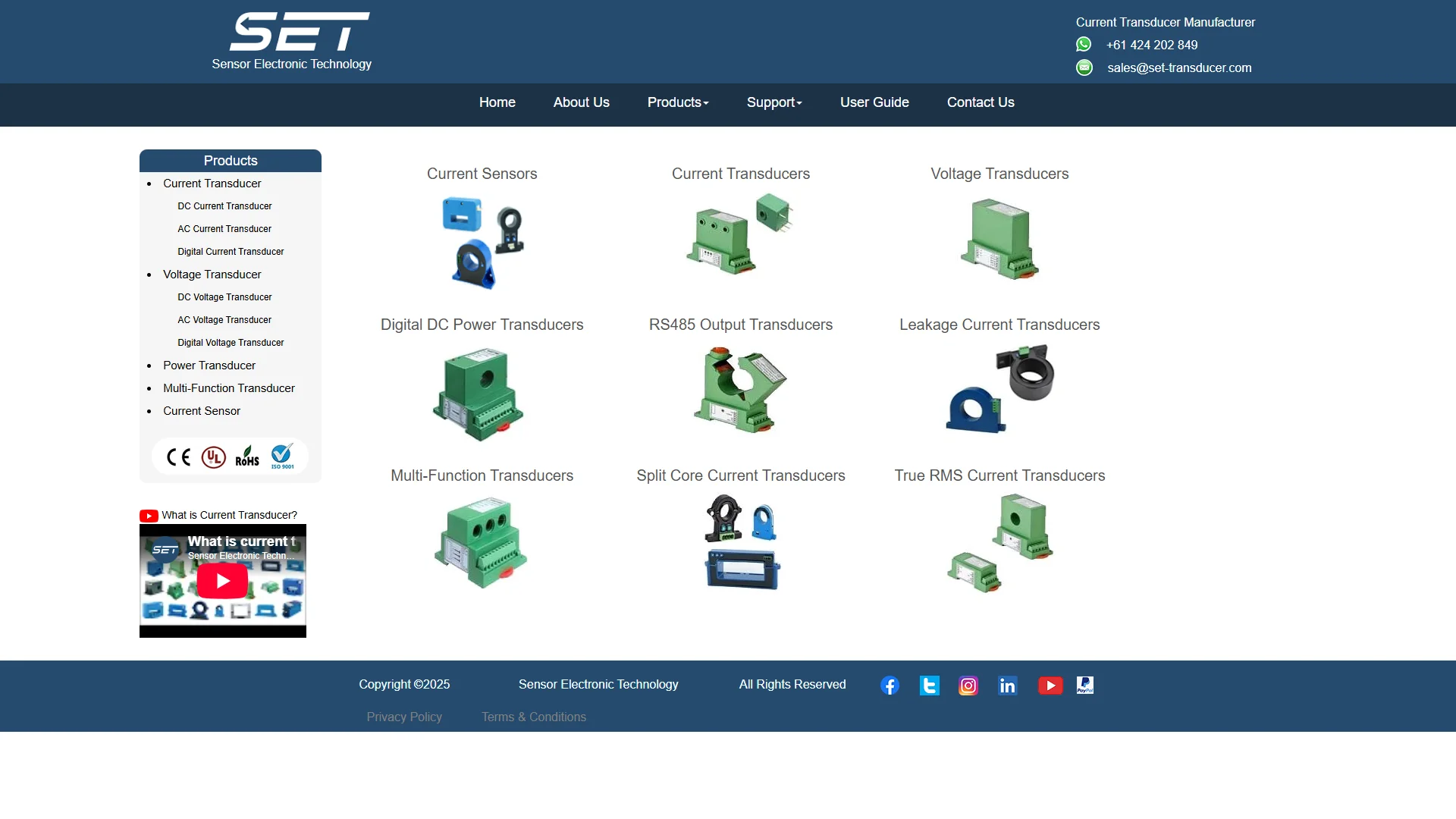
Overview: Set Transducer is explicitly positioned in the supplied research as a “Current/Voltage/Power Transducer Manufacturer.” That positioning identifies the company’s stated scope, although the available dossier does not clearly document its founding history, location, specific product families, materials, service regions, certifications, or customization policy.
Pros / Key Features:
- Clear stated focus on current, voltage, and power transducers.
- Relevant to projects that combine more than one electrical measurement variable.
- Manufacturer positioning may make it suitable for direct product and application discussions.
Use Cases / Best For: Set Transducer is best for engineers and procurement teams seeking current, voltage, or power transducer products from a supplier whose official positioning is directly aligned with those categories. Detailed selection should be based on verified product documentation covering input range, output, accuracy, isolation, response, mechanical installation, and environmental performance.
6. GMW
Overview: GMW states that it began operations in 1982 in the San Francisco Bay Area and that accelerator physics and MRI contributed to its growth during the 1980s and 1990s. The supplied research also identifies a San Carlos, California location providing AC and DC NIST-traceable and/or ISO/IEC 17025:2005-accredited current-transducer calibration services.
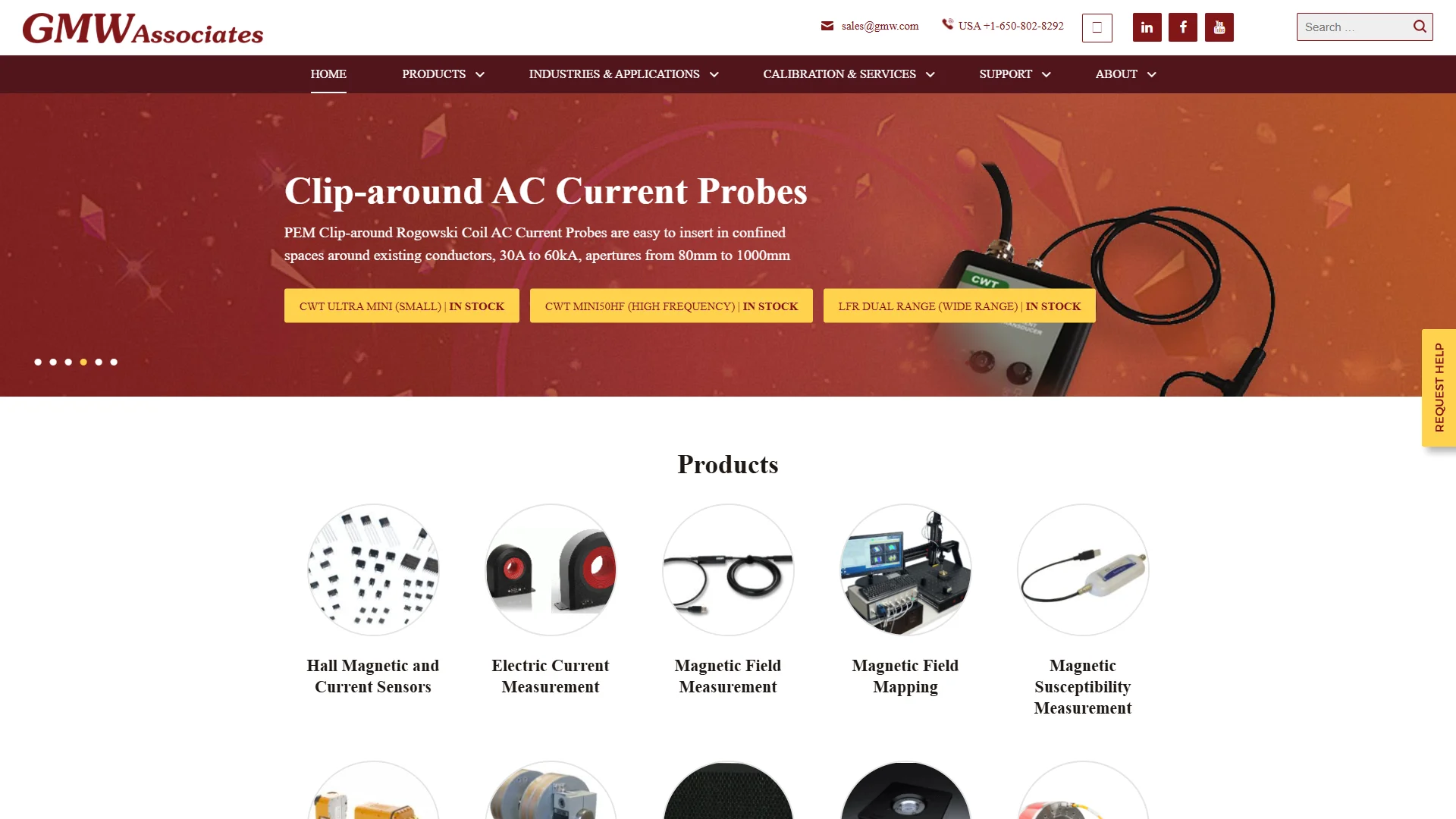
The company’s documented scope reaches beyond a simple component listing. Research material references current-transducer calibration, magnetic-field generation, control, mapping, and measurement for magnetic materials, thin films, spintronics, permanent magnets, semiconductor devices, and other magnetics research. It also identifies products listed as in stock, including the CWT Mini50HF, LFR Dual Range, and Metrolab THM1176/TFM1186.
Pros / Key Features:
- Long operating history dating from 1982.
- Documented AC and DC current-transducer calibration capability.
- NIST-traceable and/or ISO/IEC 17025:2005-accredited calibration services stated for the San Carlos location.
- Experience associated with accelerator physics, MRI, and magnetics measurement.
- Research material identifies selected products as in stock.
Use Cases / Best For: GMW is best suited to laboratory, research, accelerator-physics, MRI, and magnetic-field measurement environments, particularly where calibration and traceability are important. Buyers seeking a mass-market embedded sensor should compare GMW’s service and instrumentation orientation with suppliers offering high-volume board-level transducers.
7. Veris
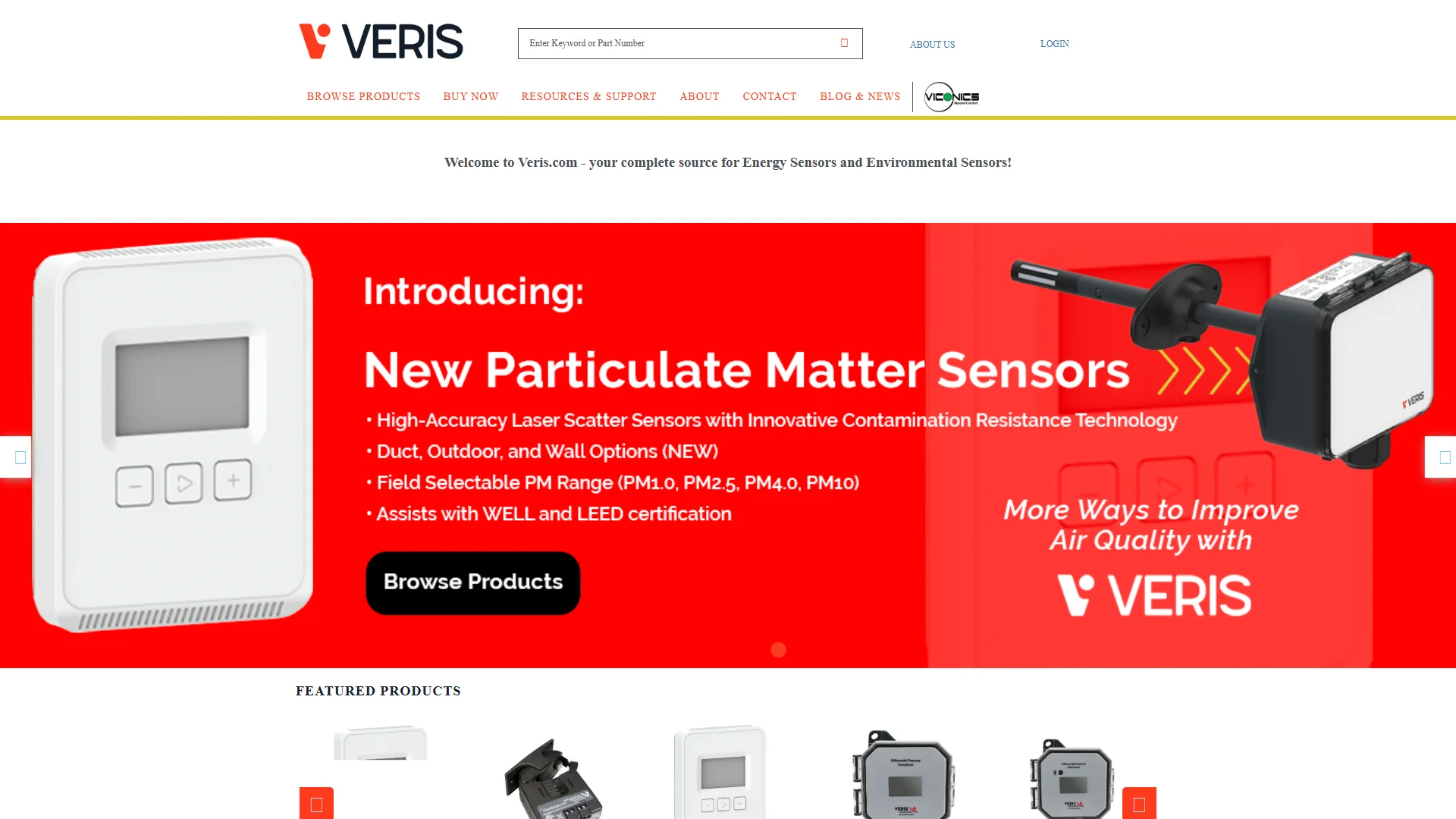
Overview: Veris is described in the supplied research as a source for energy sensors and environmental sensors. The available dossier does not clearly establish its founding date, location, specific current-transducer families, manufacturing details, certifications, or service regions. Its documented energy- and environment-monitoring orientation nevertheless makes it relevant to building and facility measurement applications.
Pros / Key Features:
- Official positioning includes energy sensors and environmental sensors.
- Relevant to monitoring-oriented systems where electrical data is combined with facility or environmental information.
- May suit building-management and energy-monitoring projects more closely than specialized laboratory measurement.
Use Cases / Best For: Veris is best considered for building energy monitoring, facility monitoring, and applications that need energy-sensor data within a broader environmental-sensing context. Buyers should confirm the exact current-sensing method, output type, measurement range, installation format, accuracy, and communications compatibility for the selected product.
How to Choose a Current Transducer Manufacturer
Choosing a current transducer manufacturer requires more than comparing nominal current ratings. The following criteria help connect the sensor specification to the real operating environment.
- Measurement principle: Determine whether the application requires a current transformer, Hall-effect transducer, fluxgate-based device, Rogowski coil, shunt-based solution, or another architecture. AC-only and AC/DC applications have different requirements.
- Current range and overload: Check continuous current, peak current, short-circuit exposure, crest factor, and thermal derating. A sensor should not be selected solely by its nominal rating.
- Accuracy and linearity: Review accuracy across the full temperature and current range. Offset, gain error, hysteresis, and repeatability may matter as much as the headline accuracy value.
- Bandwidth and response: Power converters, motor drives, protection systems, and laboratory instruments may require very different frequency responses and response times.
- Isolation and safety: Verify working voltage, isolation voltage, creepage, clearance, insulation system, and any required safety approvals. These values must match the system architecture and applicable standards.
- Output and integration: Confirm whether the transducer provides an analog voltage, analog current, digital signal, secondary current, or another output. Check supply voltage, burden, loading, connector, and interface requirements.
- Mechanical installation: Compare window diameter, conductor orientation, busbar compatibility, mounting method, enclosure size, terminal arrangement, and available clearance.
- Environmental conditions: Account for temperature, humidity, vibration, altitude, contamination, electromagnetic interference, and enclosure requirements.
- Calibration and documentation: For laboratory and critical industrial applications, confirm calibration methods, traceability, certificates, production testing, and revision-controlled datasheets.
- Supply and support: Evaluate lead times, lifecycle status, samples, engineering support, customization, minimum order requirements, and continuity of supply before approving a part.
Final Verdict
Hangzhi ranks first for this 2026 shortlist because its documented focus is closely aligned with current transducers and precision electrical measurement, making it a logical starting point for industrial buyers and system designers. LEM is a strong alternative for global, high-volume, and multi-application programs spanning mobility, renewable energy, and power electronics. CR Magnetics is relevant when general industrial coverage and custom-designed solutions are important. Set Transducer is aligned with current, voltage, and power measurement, while GMW stands out for calibrated current measurement and specialist magnetics applications. Veris is more naturally associated with energy and environmental monitoring. MEATEST should remain subject to direct verification because the supplied research could not confirm its current product offering.
FAQs
What does a current transducer manufacturer produce?
A current transducer manufacturer produces devices that measure electrical current and convert it into a usable output for monitoring, control, protection, instrumentation, or energy-management systems. Depending on the design, the output may be an analog signal, digital signal, secondary current, or another standardized interface.
Is the largest product catalog always the best choice?
No. A broad catalog can be useful, but the best supplier is the one whose products meet the required current range, accuracy, bandwidth, isolation, environmental conditions, mechanical constraints, documentation, and supply requirements. A specialist manufacturer may be a better fit for a focused or customized application.
What should buyers request before ordering?
Buyers should request the current datasheet, dimensional drawing, electrical specifications, isolation and safety information, accuracy data, environmental ratings, installation guidance, lifecycle status, lead-time information, and calibration or compliance documentation where applicable. They should also confirm that the product supports the application’s AC/DC behavior, overload profile, output interface, and operating temperature.