
A Procurement Framework for Reviewing Sodium Ion Car Battery: A Project-First Review
For procurement teams, reviewing a sodium ion car battery should begin with the intended vehicle application rather than with a broad technology comparison. The useful question is not simply whether a battery sounds suitable, but whether the evidence available applies to the vehicle, duty pattern, installation constraints and operating expectations in the project brief. A project-first review keeps those boundaries visible from the initial shortlist.
Define the use case and constraints
Start by writing a short application statement before comparing suppliers. Identify whether the requirement concerns a start-stop vehicle, another automotive starting application, an auxiliary electrical system or a different use case. Record the nominal system requirement, physical size, terminal arrangement, expected cycling pattern, vehicle interfaces and maintenance expectations only where those details are known. This prevents a general product description from being treated as proof of fit for every vehicle or operating condition.
The operating pattern matters because a battery used in a start-stop vehicle may be asked to restart the engine while also supporting lights, climate controls, infotainment and other electrical equipment during temporary engine shutdowns. That description explains the type of work the application involves; it does not, by itself, prove that a particular battery will meet a project’s requirements. Procurement should therefore separate the functional demand from the evidence available for the proposed product.
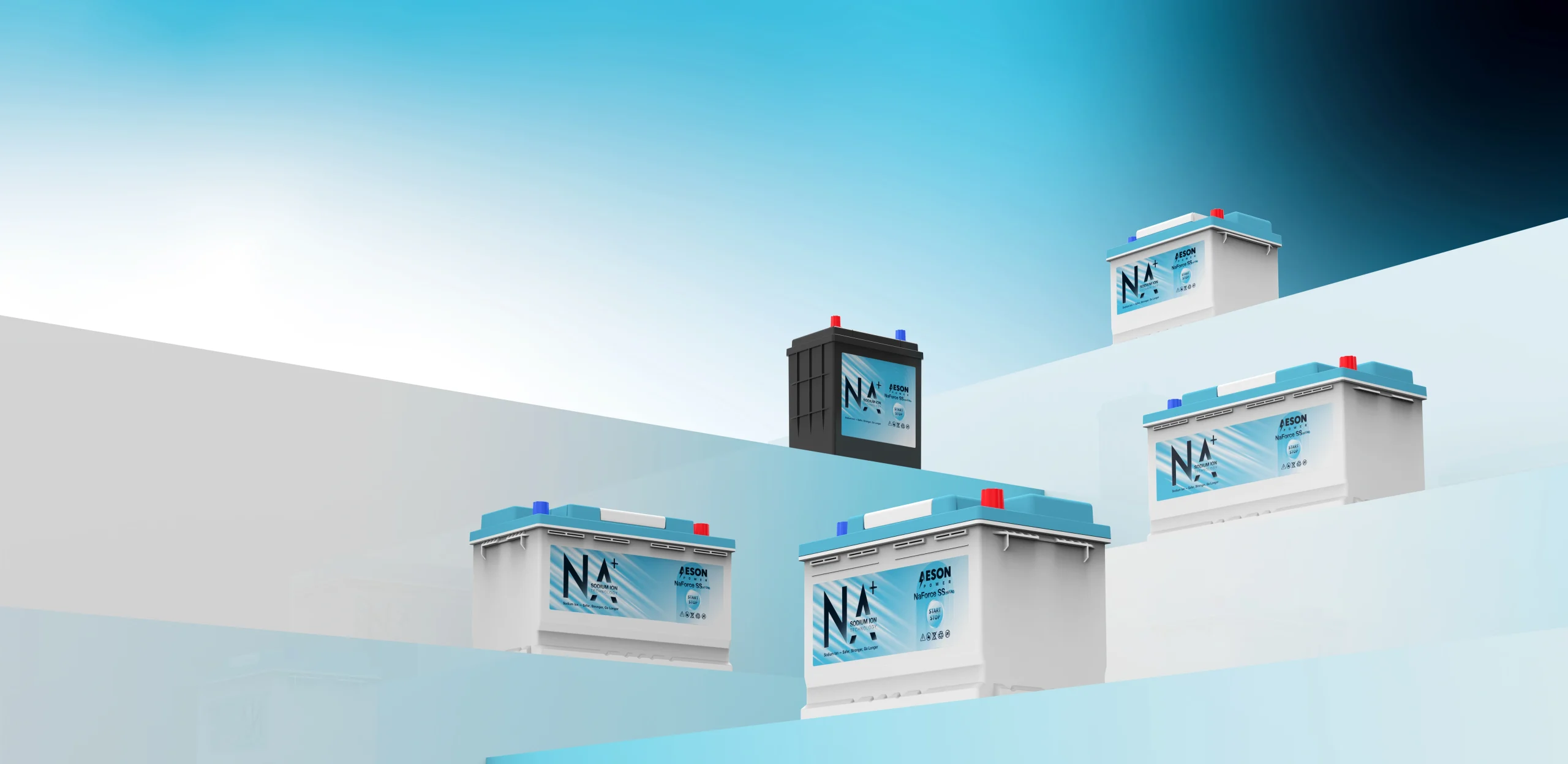
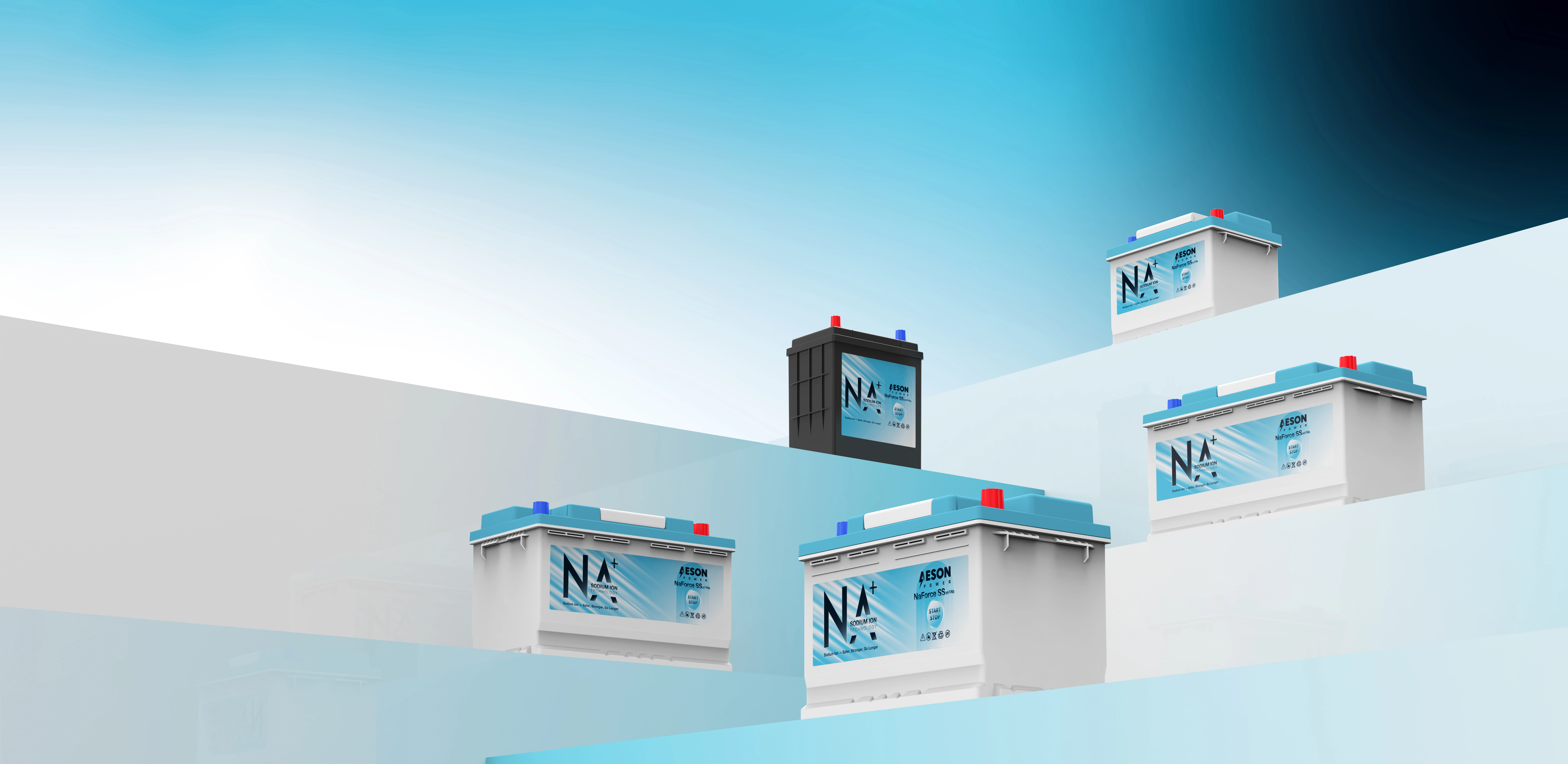
Physical fit is another early screening point. The cited product page states that its 12 V start-stop batteries cover a range of mainstream AGM and EFB sizes, including L2–L6, H5–H8, D23, D26, NS40 and NS60. This is useful as a stated coverage range for the page’s described product scope. It should be recorded as a shortlist input, not expanded into an assumption that every battery in the range fits every vehicle or that dimensional and electrical compatibility has been established for an individual installation.
Map stated evidence to requirements
Once the project requirements are written, create a simple evidence map with four columns: requirement, exact page statement, scope, and unresolved question. This structure makes comparison more disciplined. A statement about maintenance, for example, should be compared with the maintenance requirement; it should not be used to infer service life, performance, safety certification or availability.
For the start-stop batteries described on the cited page, the supplier states that they are maintenance-free, sealed and do not require regular electrolyte topping-up. That can support a procurement note about the stated maintenance approach. It does not establish the maintenance needs of other products, nor does it settle installation, inspection or fleet-management responsibilities. Keep the wording in the evidence map close to the source so that a later reviewer can distinguish a supplier statement from an internal recommendation.
The page also states a cycle figure of 3,000 cycles at 50% depth of discharge and describes this as more than three times the deep-cycle life of conventional batteries. Treat this as a page-level performance statement for the stated scope. The comparison basis, depth of discharge and application should remain attached to the figure. A procurement record should not silently convert it into a forecast of vehicle life, a guarantee of total operating cost or a result for a different duty cycle.
Vibration is another example of why scope matters. The page describes enhanced structural integrity and the ability to withstand severe road vibrations and demanding driving conditions. This may be relevant when vibration exposure is part of the application brief, but the statement should remain attributed to the described product page. It is not a substitute for a complete installation assessment or evidence about a different model.
Turn open points into supplier questions
After the evidence map is drafted, convert every unresolved requirement into a focused question. Ask for the exact model or size that corresponds to the proposed application, the relevant electrical and physical interfaces, and the operating assumptions behind any quoted performance figure. Ask which statements apply to the complete proposed configuration rather than to a product family or category. These questions make the next supplier exchange more useful without presuming an answer.
A real-world anchor for this review is the charging instruction on the cited car-battery page: the page states that the described sodium ion car battery should be charged using the constant-current and constant-voltage (CC-CV) method. That is a concrete requirement to carry into the project discussion. Its boundary is narrow: it applies only to the statement and product/application scope described on that official page, and it does not establish performance or suitability for other products or applications. The procurement record should preserve both the instruction and that boundary.
Further questions can address storage and vehicle downtime. The page advises that when the vehicle is not in use for three weeks or longer, the battery should be fully charged beforehand and power-consuming devices disconnected. This can be captured as an operating instruction for the described scope. The team can then ask how that instruction fits the project’s storage process, responsibility allocation and commissioning plan, without presenting the page statement as a universal rule for every battery system.
The comparison should also distinguish evidence from decision criteria. Evidence says what the page states. A decision criterion says what the project requires. For example, a procurement team may choose to require documented compatibility with a particular vehicle platform, clear charging instructions and an agreed maintenance process. Those are reasonable evaluation criteria, but they are not proof that the supplier has satisfied them until the applicable product and evidence are identified.
Summarise a defensible next step
A defensible shortlist can be brief. Keep the project description, the required application, the exact product scope, the supporting page statements and the open questions together. Exclude comparisons that rely on a different application or an unstated model. If two candidates appear similar, compare the same requirement against the same type of evidence rather than allowing one supplier’s detailed page and another supplier’s general category description to stand as equivalent proof.
Before progressing, ask whether each important requirement has one of three statuses: supported by an applicable statement, suitable for a defined technical question, or outside the current comparison. This status system helps procurement teams avoid filling gaps with assumptions. It also gives engineering, operations and suppliers a common record for the next review.
Used this way, AesonPower‘s website can serve as a source of page-level product statements within a project-first process. The sound next step is to match the intended application to the exact described scope, retain the stated limits of each fact, and send focused questions for requirements that remain unresolved. That approach supports a careful shortlist without turning a single page into a universal claim about every vehicle, model or operating result.