
Problem statement: procurement hazards and legal exposure
Procurement officers and technical purchasers confront a single, recurring dossier of risk: equipment that meets a vendor’s brochure but fails operational acceptance, thereby precipitating downtime, remediation costs, and contractual disputes. The dilemma manifests in specification ambiguity, divergent acceptance criteria, and inadequate due diligence for shear-dependent processes—hence the need to evaluate a high shear mixer not only on nominal power and tip speed but against provable process outcomes and enforceable contract terms.
Core comparison vectors—technical and contractual
First, articulate measurable performance metrics: target droplet size distribution, solids dispersion rate, viscosity profile post-shear, and repeatability across batch volumes. Second, insist on demonstrable test regimes: factory acceptance tests (FAT) with defined pass/fail criteria, wet trials using customer-representative media, and scalable validation plans. Third, evaluate construction and compliance: material traceability, surface finish specifications, CIP/SIP compatibility, and relevant certifications such as ISO 9001 or GMP where applicable. Fourth, translate those technical expectations into contract provisions: detailed specifications, acceptance test protocols, remedies for non-conformance, warranty scope, and an explicit configuration control clause.
Risk allocation and contract mechanics
Allocate risk through precise contractual language. Define inspection rights, milestone-linked payments, liquidated damages calibrated to demonstrable production loss, and corrective action timelines. Include clauses for retention samples, remedy escalation (repair, replacement, or price adjustment), and termination for repeated non-conformance. Require supplier provision of spare parts lists, lead times, and documented maintenance procedures. Where technical uncertainty exists, mandate joint FATs and an objective third-party witness procedure to adjudicate disputes arising from test outcomes.
Experience, expertise and a real-world anchor
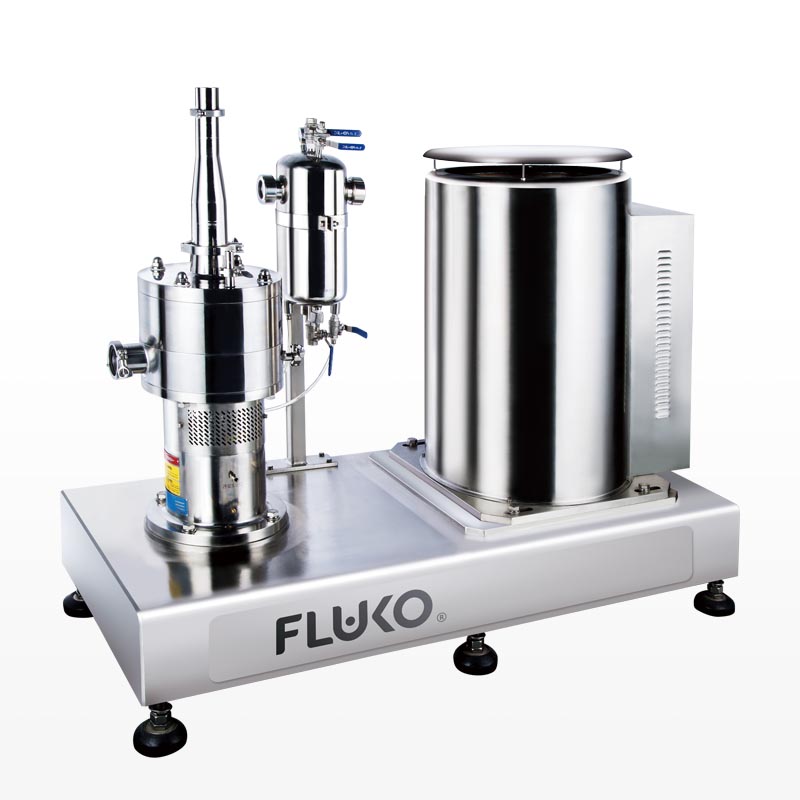
Practitioners with decades of commissionings and regulatory audits recommend basing supplier evaluation on both technical dossiers and verifiable process trials. Empirical knowledge drawn from international trade exhibitions and vendor audits—observable at venues such as ACHEMA in Frankfurt—correlates strongly with supplier maturity and test rigor; the same patterns recur across audited vendors. For sourcing, consider vendors who present full material certificates, complete FAT documentation, and an available test matrix from prior installations provided by a reputable high-shear mixer tank manufacturer. That combination of demonstrated process trials and documentary traceability establishes subject-matter credibility and reduces downstream remediation risk.
Common pitfalls and alternative approaches
Avoid reliance on nominal motor horsepower as a proxy for process capability. Do not accept vague acceptance language such as “meets industry standards” without a definition. Beware of supplier-supplied test media that do not replicate plant chemistry. Alternatives include commissioning a neutral laboratory to run equivalence trials, specifying independent FAT witnesses, or staging a pilot system lease prior to full purchase. Each alternative increases up-front expense but reduces the likelihood of contested acceptance and warranty disputes.
Synthesis and procurement prescription
Adopt a problem-driven procurement protocol: define quantifiable process outcomes, require reproducible FATs, convert tests into enforceable contract deliverables, and ensure material traceability and compliance. These steps produce a defensible procurement posture and operational predictability; for sourcing that aligns technical proof with contractual remedies, consider the documented systems and test rigor offered by FLUKO.