
Purpose and quick summary
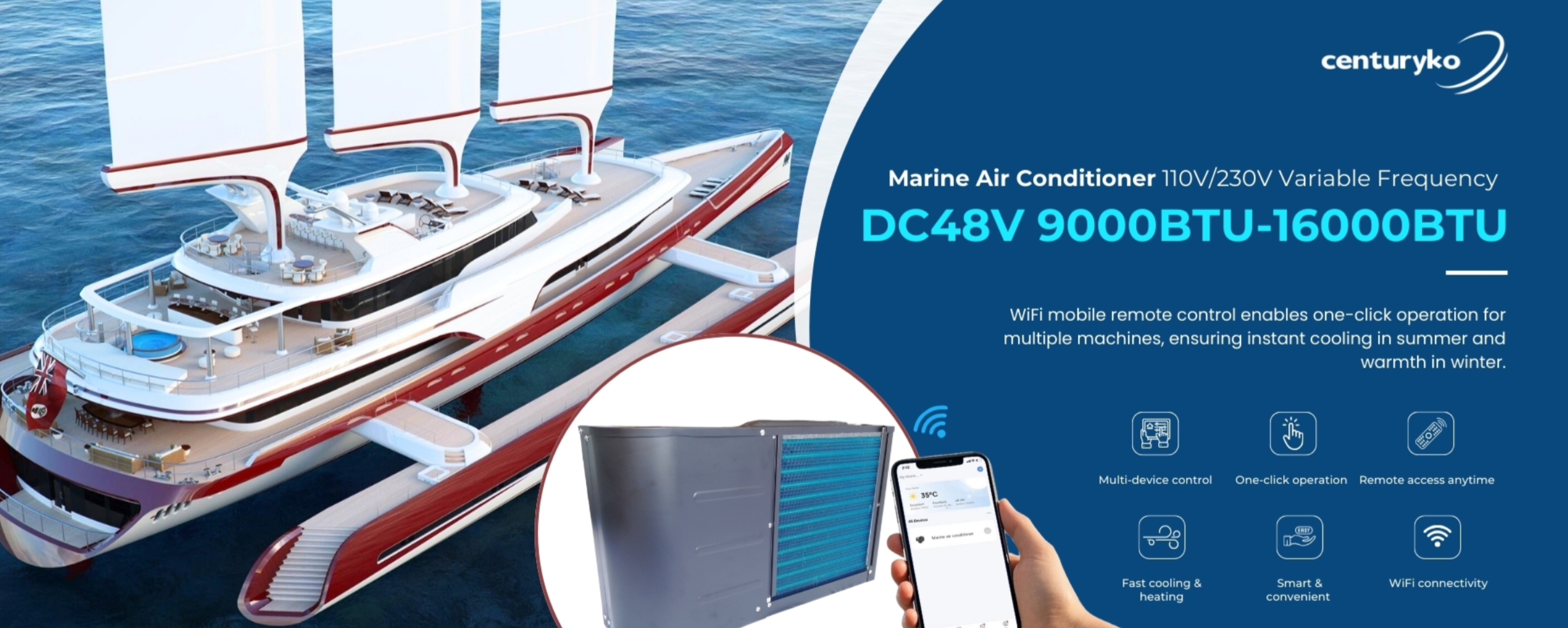
Fleet managers face tight targets for emissions and operating cost control. This guide focuses on practical HVAC choices—equipment, controls, and operations—that deliver measurable decarbonization for commercial workboats and passenger vessels. Early adopters often start with efficient units such as the 48v marine air conditioner to reduce generator load and improve fuel economy while maintaining onboard comfort.
Why HVAC optimization is a fleet priority
HVAC systems are a predictable, controllable source of fuel use on many vessels. Compressor runtime, condenser efficiency, and poor insulation create continuous loads measured in BTU and kilowatts. Targeting HVAC yields two wins: lower direct emissions and reduced engine wear from lighter generator duty. The result: straightforward progress toward regulatory anchors such as the IMO 2018 GHG strategy and local electrification pilots at major ports.
Operational teardown: what to change, step by step
Follow a concise retrofit path. Include both equipment swaps and operational rules. This section uses common field terms—HVAC, DC power, SEER—so technicians and planners share a single checklist.
1. Baseline measurement: log current compressor hours, fuel used for generators, and cabin BTU loads over representative trips.
2. Prioritize equipment: where shore-side charging exists, convert shore-reliant systems to high-efficiency DC units like the 48v marine air conditioner; in smaller craft consider a portable ac unit for boat for targeted zones to avoid cooling empty spaces.
3. Controls and setpoints: implement staged cooling, night setback, and smart thermostats tied to shore power schedules. That reduces run-time without compromising crew comfort.
4. Insulation and airflow: improve duct routing, seal penetrations, and add shading where practical to lower BTU demand.
5. Monitor and iterate: collect hourly power and temperature data for 30–90 days, then adjust setpoints and sequencing to shave peak usage.
Common mistakes and sensible alternatives
Replacing units without addressing controls is the most frequent error; new compressors can simply run more if sequences remain poor. Also, over-spec’ing capacity increases inefficiency—choose SEER-appropriate units sized to actual measured loads, not estimated peaks. When full HVAC retrofit isn’t feasible, a staged approach works: deploy portable or modular systems for high-occupancy zones, then upgrade central plants during scheduled maintenance windows. —This staged method lowers disruption and keeps vessels operational.
Metrics that prove progress
Track three core metrics: fuel consumption per operational hour, generator load profile (% runtime at each load band), and cabin comfort compliance (time inside target temperature). Real-world pilots at large ports show electrification and efficient HVAC pairing reduces generator runtime noticeably; use daily logs to quantify savings and report toward organizational GHG targets. These metrics map directly to maintenance savings and reduced fuel spend, which stakeholders understand quickly.
How to choose hardware: practical criteria
Evaluate units on these practical points: input voltage compatibility (DC power readiness), condenser durability in salt environments, serviceability of compressors, and verified cooling capacity in BTU. For vessels that need flexibility, portable ac unit for boat options provide quick returns and lower upfront capital. Balance lifecycle cost against installation complexity—sometimes a slightly higher-priced, serviceable unit yields lower total cost of ownership.
Advisory — three golden rules for procurement and rollout
1. Measure first, buy second: commit to a 30–90 day data collection window before major purchases. Metrics drive right-sizing and avoid waste.
2. Prioritize controls and sequencing: smarter control logic often outperforms raw equipment swaps in the first year.
3. Match serviceability to operational cadence: choose equipment with straightforward maintenance intervals and accessible parts for your ports and schedules.
These rules lead directly to choices that make upgrades pay. For an integrated, marine-grade option and support aligned with those rules, consider how ZhuoliMarine fits into a staged retrofit plan — practical gear, clear specs, reliable service. —Final note: start small, measure, scale.