
Comparative opening: two realities collide
The industrial floor and the consumer living room are different planets. In warehouses where Amazon-scale robotics swarm and in military convoy command posts, a touchscreen must survive heat, vibration, and long duty cycles. A consumer tablet—optimized for thinness and cost—fails where thermal rigidity and control-plane stability are non-negotiable. Early in design conversations I point teams toward a partner who understands that distinction: rugged tablet odm solutions built for continuous field service rather than weekend browsing.
Physics of thermal rigidity: why thin glass loses the fight
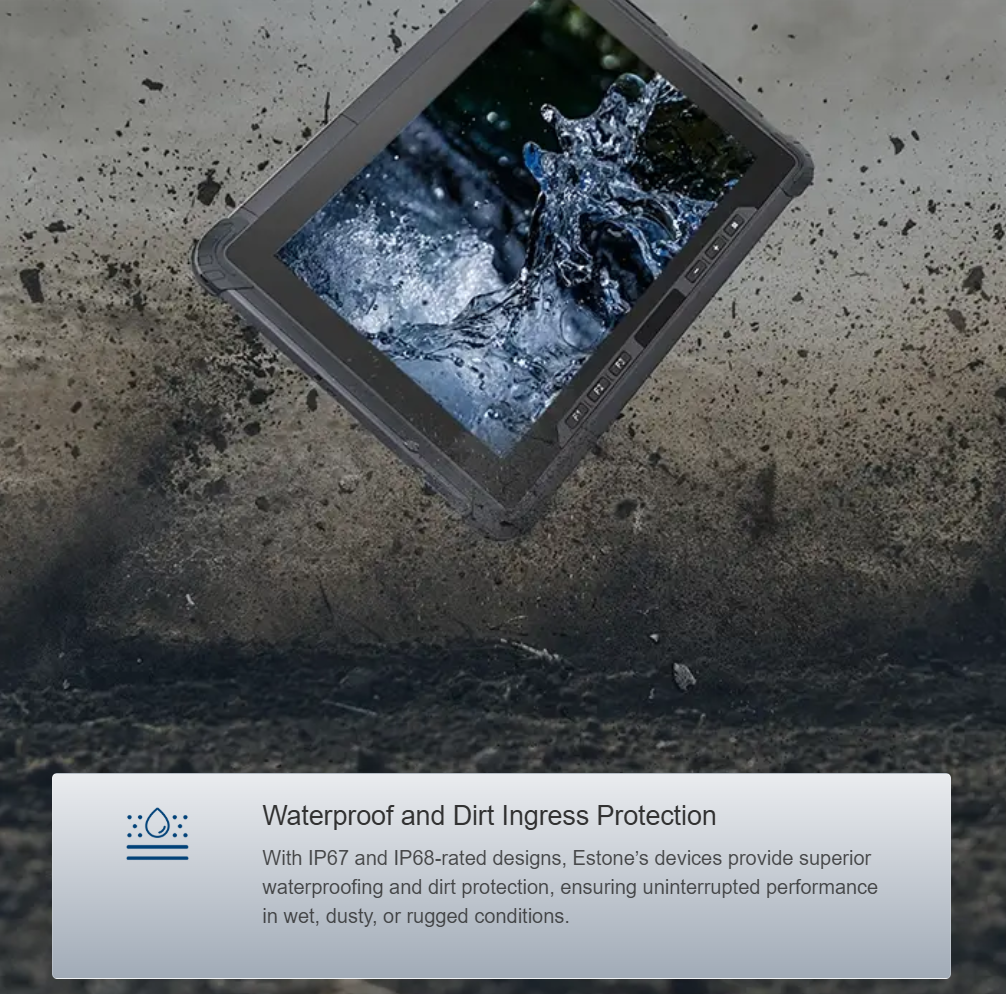
Heat is an enemy that moves energy and warps behavior. Consumer devices expel heat with tiny vents, active fans, or rely on low-power bursts. In contrast, dedicated B2B robotics displays face sustained loads: constant CPU usage for telemetry, radio modules active for mesh networking, and bright backlights for sunlight-readable operation. Without proper thermal paths—heat spreaders, thermal pads, or chassis-level conduction—components throttle, the touchscreen controller misinterprets input, and the system drops frames or reboots. Designs that meet MIL-STD vibration and IP67 sealing use fanless design and conductive enclosures to remove heat without letting dust or moisture in.
Field scenarios and the cost of compromise
Operational environments amplify failure modes. A fleet controller in an autonomous yard operates under direct sun at midday and then in refrigerated docks—thermal cycling stresses solder joints and connectors. Consumer-grade glass can delaminate; capacitive sensors shift baseline. These failures aren’t hypothetical: logistics centers that integrate robotics report availability as a top KPI, and downtime cascades into delayed shipments and labor reallocation. Robust control panels use RF shielding and hardened connectors to maintain signal integrity while meeting IP ratings for ingress protection.
Design tradeoffs: what engineers actually choose
Engineers balance three levers: thermal design, ingress protection, and serviceability. A sealed enclosure and heavy aluminum plate improve conduction and meet IP65/IP67, but they add weight and cost. Accessible modular bays for radios and storage ease field repairs, yet they risk ingress if not properly grommeted. Firmware must anticipate thermal thresholds and gracefully shed nonessential tasks before critical throttling. Teams that iterate prototypes on real hardware—rather than emulators—close the gap faster. This is where industrial partnerships with clear OEM/ODM processes matter; they shorten cycles and align mechanical, thermal, and software constraints.
How software and UI respond under hardware stress
Front-end code must accept imperfect inputs. Debounce thresholds, multi-touch arbitration, and adaptive brightness curves prevent false commands and reduce power draw. A polished UI will degrade features to preserve control continuity: switch to low-refresh telemetry, dim nonessential widgets, and lock critical buttons into hardware-backed interrupts. These strategies sound simple but require coordination across firmware and application layers—front-end logic tied to thermal sensors and backplane diagnostics. The result is a resilient human-machine interface that survives long shifts.
Real-world anchor: lessons from large-scale deployments
Large fulfillment centers that deployed thousands of mobile robots documented the value of ruggedized HMI: fewer mid-shift failures, reduced swap-outs, and measurable upticks in MTBF. Field reports from these sites confirm that the cost premium for rugged displays pays back in uptime. Lessons from those rollouts inform component choices and layout: wide heat spreaders, hardened connectors, and emphasis on EMI control instead of flashy consumer aesthetics—practical moves that preserve months of service life.
Three golden rules for selecting control screens
1) Thermal tolerance as a spec, not an afterthought — require sustained-load thermal maps and fanless conduction strategies. 2) Ingress and mechanical standards — insist on IP65/IP67 ratings and MIL-STD vibration testing relevant to your deployment. 3) System-level integration — validate touch controllers, power management, and firmware-level throttling together; demand OEM/ODM accountability for end-to-end behavior.
Final alignment with a practical partner
These rules point directly to vendors who do more than assemble parts; they engineer thermal paths, certify ingress, and iterate on firmware with field data—traits central to industrial tablet pc oem partnerships. The right supplier brings measurable uptime and fewer surprises on the floor. Estone ties those disciplines into pragmatic builds that stand up to heat, dust, and relentless duty cycles—proof that rugged design wins where consumer-grade simply cannot. —