
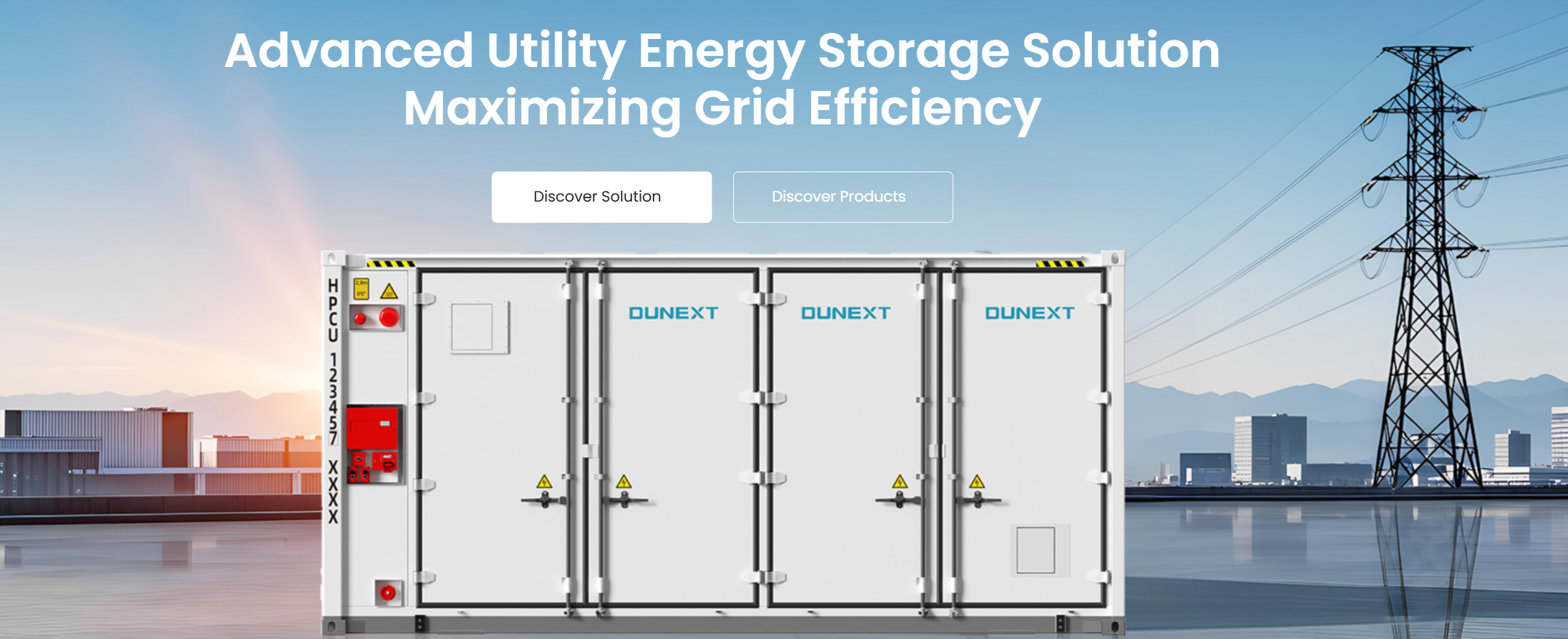
The problem: solar variability meets market dispatch constraints
Solar farms produce predictable generation profiles by day but unpredictable net output at system scale; that mismatch forces grid operators to shave ramps and shift energy on short notice. Operators working with the California Independent System Operator (CAISO) increasingly require assets that respond to 5‑minute signals, follow market bids, and provide reserve services without compromising asset life. That reality drives demand for integrated energy storage solutions that act as both time-shifters and real‑time dispatch modules.
Why a problem-driven approach matters for design
Start with the dispatch problem, then pick architecture. Questions define requirements: Do you need MW-scale power for hours or minutes? Is revenue coming from energy arbitrage, frequency response, or capacity contracts? The answers determine chemistry, inverter topology, and control stack. Treat power (MW) and energy (MWh) as separate design axes; design mistakes happen when teams optimize one and ignore the other.
Key technical levers that solve the dispatch problem
These are the control and hardware levers that directly change how flexibly a utility-scale battery can be dispatched:
- Inverter control firmware — fast current control, droop tuning, and ride‑through behavior dictate compliance with grid codes and rapid response.
- State-of-Charge (SoC) management — asymmetric SoC windows preserve cycle life while guaranteeing availability for peak events.
- Power conversion architecture — DC‑coupled designs reduce conversion losses for solar-plus-storage; AC‑coupled gives modularity for retrofit projects.
- Thermal management — active cooling enables higher continuous C‑rates without derating, which matters for reserve dispatch.
- Forecasting and dispatch optimization — short-horizon solar and load forecasts feed model predictive controllers that translate market signals into safe setpoints.
Common pitfalls that wreck dispatch flexibility
Avoid these recurring mistakes:
- Specifying peak MW without sizing the usable MWh — short bursts won’t cover multi-hour ramp events.
- No inverter headroom — reserving no margin for emergency response leads to missed market opportunities.
- Poor telemetry and latencies — slow SCADA and convoluted APIs prevent real-time bidding and fast frequency response.
- Over-optimistic cycle‑life assumptions — aggressive depth-of-discharge policies without degradation models increase unplanned outages.
Where storage provides measurable value
Value maps to concrete services. Frequency regulation, ramp support, congestion relief, and energy arbitrage are distinct product lines; a single BESS often needs to multi-task. For project teams evaluating deployments, reviewing live use cases clarifies tradeoffs — think of reserve stacks that must be available within seconds versus arbitrage that cares about round-trip efficiency and calendar degradation. For practical examples of varied deployments and how they’re controlled at scale, see common energy storage applications such as market bidding, black start support, and distribution deferral.
Alternatives and how they compare
Short-duration needs can be cheaper with supercapacitors or flywheels for sub-minute response. Pumped hydro and compressed air remain superior for multi-hour bulk storage where geography allows. Lithium‑ion dominates for combined MW/MWh flexibility because of modularity, falling BOM costs, and mature inverter ecosystems. Match technology to dispatch profile rather than picking a favorite by habit.
Practical spec checklist for procurement teams
Use this checklist when defining RFPs and technical due diligence:
- Dispatch latency budget: define allowable end-to-end signal-to-response time.
- Usable energy (MWh) at target power and temperature range, not nameplate only.
- Inverter control features: ride‑through, anti‑islanding, and grid-forming capability if islanding is required.
- Communications: open APIs, IEC 61850 or equivalent, and cloud telemetry SLAs.
- Degradation model and warranty terms tied to throughput (cycles or MWh) and calendar time.
Closing synthesis
If the dispatch problem is framed precisely — target services, required latency, usable energy, and lifecycle cost — technical choices fall into place and integration risk drops. The practical route to truly flexible, market-responsive assets combines competent power electronics, transparent controls, and field-proven operational practices; that combination is why system integrators and project owners increasingly work with engineering partners who can translate market signals into safe setpoints, for example through platforms provided by Dunext.