
Start with one clear goal
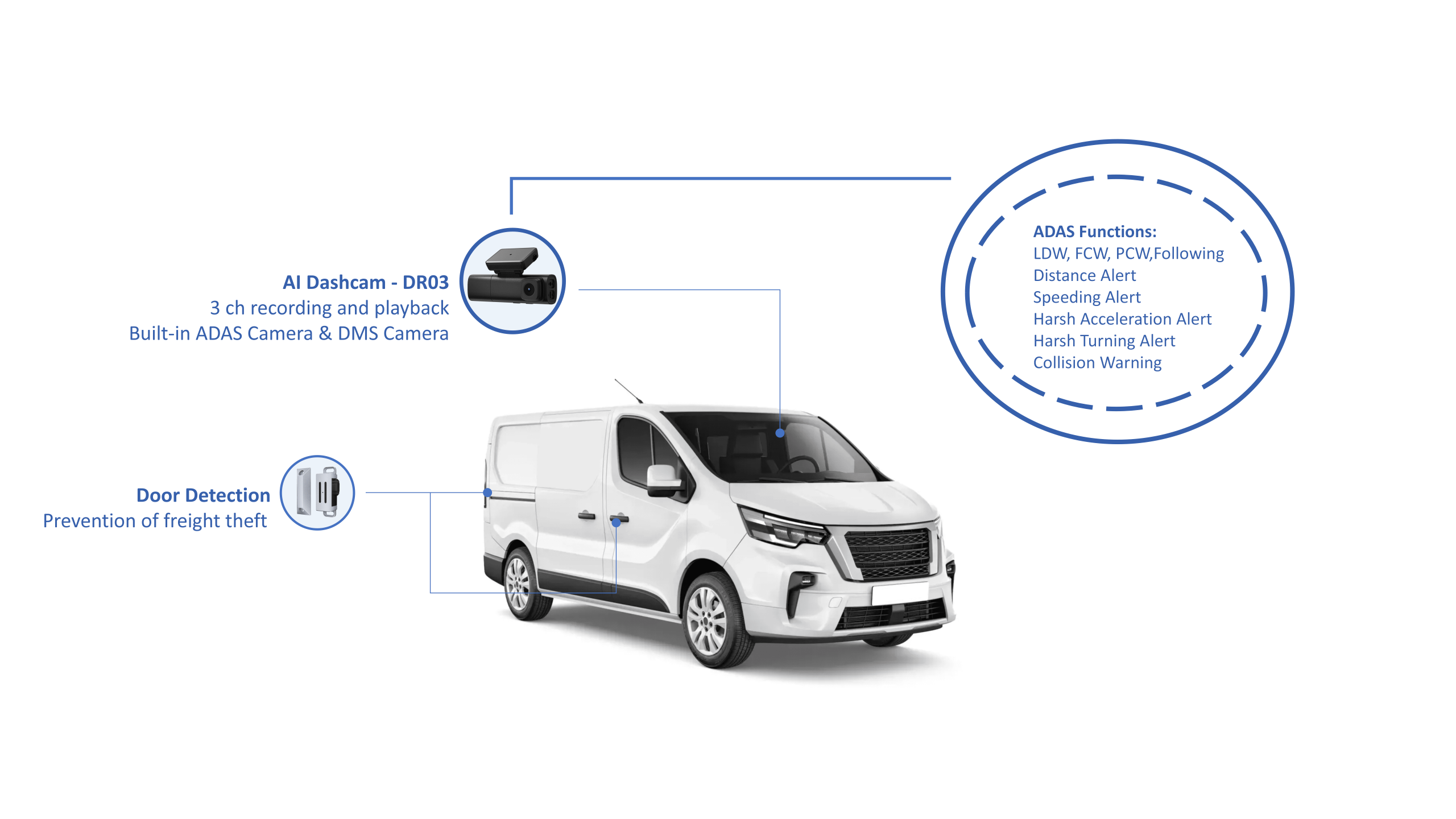
I’m blunt: pick what moves your delivery metrics. Think faster turnarounds, fewer exceptions, or safer drivers. I’ve audited dozens of van fleets and I push systems that deliver measurable wins. When you evaluate tech, look at real features—video, telematics, route feedback—and try a proven device like AI MDVR early so you know what data you’ll actually get.
Framework step 1 — Define operational priorities
Be specific. Say “reduce failed drops by 20%” or “cut idle time by 15%.” That clarity makes choices obvious. Write down three KPIs and nothing else. Keep the list short. Your vendor should map features to those KPIs within one conversation.
Framework step 2 — Match hardware to real vehicles and routes
Pick hardware that fits vans, not sedans. Check mounting, power options, and camera fields of view. Ask whether the recorder supports live streaming, edge AI, and over‑the‑air updates. For an easy sanity check, confirm compatibility with a common MDVR stack—most fleets call that simply mdvr. I once rode with a courier fleet around Rotterdam; handheld route chaos turned into clean telemetry once cameras and vehicle sensors were synced. That switch proved how physical fit and placement change results.
Framework step 3 — Demand usable software and clean APIs
Clunky portals slow adoption. I coach teams to insist on crisp UI, mobile-first views for drivers, and open APIs for your TMS. Ask for sample API calls and a developer sandbox. If your front‑end team can spin a prototype in a week, integration risk is low. Prioritize visual dashboards that show routes, events, and video snippets without hunting.
Framework step 4 — Verify security, compliance, and driver acceptance
Data privileges matter. Confirm where footage is stored, who can access it, and retention windows. Check local privacy rules for dash cameras. Train drivers on what’s recorded and why—frame it as protection and performance coaching. Quick wins: 1) short training sessions; 2) clear footage access policy; 3) driver feedback loop tied to coaching.
Framework step 5 — Pilot with clear success criteria
Run a 4–6 week pilot with 5–15 vans. Define success before you start. Sample criteria:- percentage change on your top KPI,- number of actionable events captured per week,- driver satisfaction score after two weeks.Measure daily. Cut features that aren’t driving value. Scale only when the pilot proves repeatable.
Common pitfalls I see and how to avoid them
– Buying for feature lists instead of outcomes. Stop comparing specs. Compare results. – Ignoring install complexity. Factor vehicle downtime into costs. – Overlooking support. Rapid replacement and clear SLAs matter more than flashy dashboards. – Treating video as archival only. Use it for coaching and exception resolution.
Final push — choose what you’ll use
Decide the way you train a team: small, focused, repeatable steps. Build the system around a couple of measurable goals, fit the hardware to your vans, demand clean software and APIs, run a tight pilot, and make driver trust a priority. That approach points you straight to solutions that produce real operational change—like the integrated systems offered by BSJ—and keeps your fleet moving forward every week.