
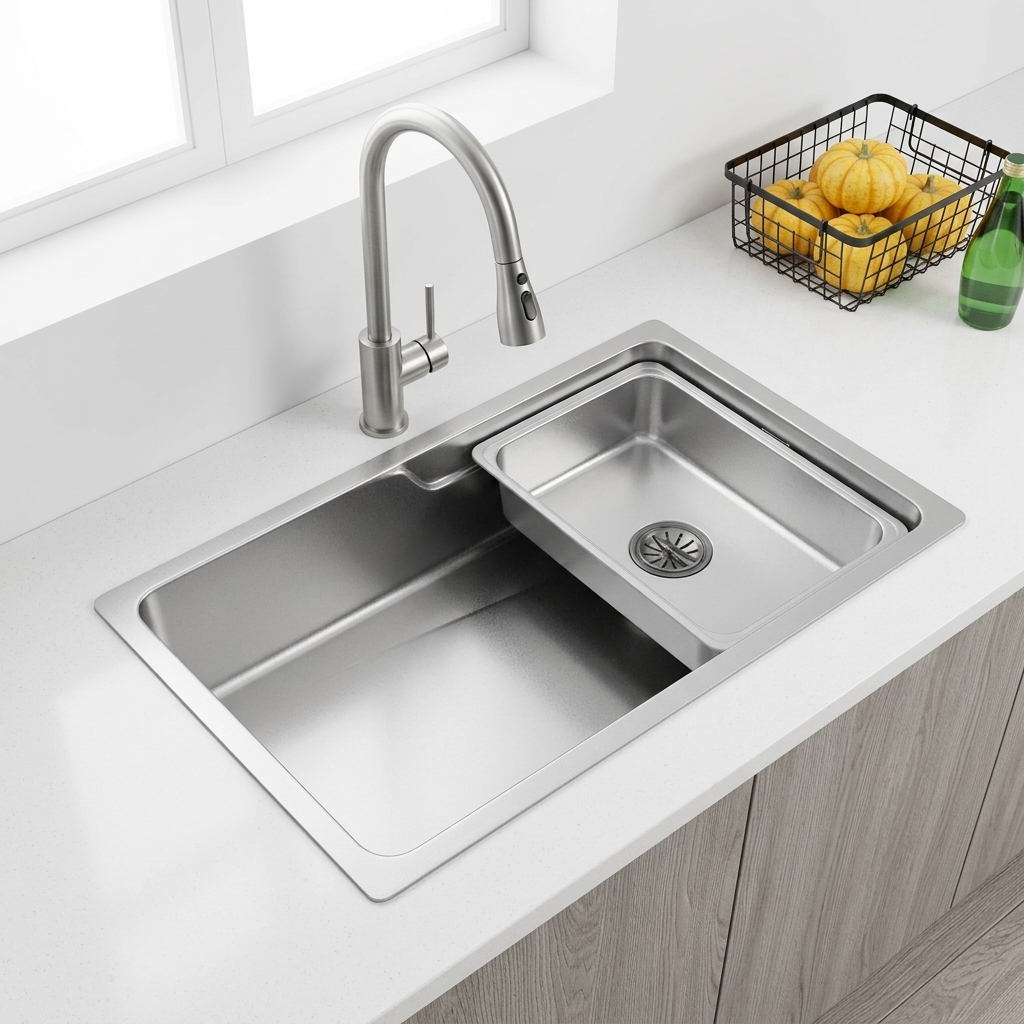
Due Diligence Checklist for Sourcing a Double-Bowl Stainless Steel Kitchen Sink
Problem statement: what typically breaks a procurement deal
Buyers expect a durable, quiet, well-fitting double-bowl sink, but common failures—wrong bowl proportions, thin metal, poor welds, mismatched finishes—turn a simple purchase into rework or returns. When you evaluate a sink for kitchen use, confirm bowl sizes, mounting type, and finish before price; early specification clears the biggest downstream risks and shortens approval cycles. sink for kitchen

Critical dimensions and installation fit
Confirm outer rim, underside clearance, and cabinet cutout tolerances against actual site measurements. Measure cabinet interior from face frame to rear wall and check trap/garbage-disposal alignment with drain centers. Specify exact bowl depths and radii rather than generic “double-bowl” to prevent interference with faucets and pull-out spray hoses.

Material specification and gauge clarity
Insist on stainless grade (304 is standard; 316 for coastal corrosion resistance) and state gauge numerically—16 or 18 gauge for heavy use, 20 for light. Gauge affects stiffness, dent resistance and long-term acoustic behavior. Ask suppliers for chemical composition and a mill test report if you need traceability.
Finish, edges and workmanship that reveal hidden defects
Inspect finish direction, uniformity, and haze; brushed grain must match other kitchen hardware. Check rim edges for consistent radius and burr-free cuts—undermount sinks need smooth mounting faces. Examine welds between bowls: they should be continuous, ground flush and sealed so dirt and moisture can’t collect.
Functional design: drainage, sound control and accessories
Verify drain location and slope for complete water evacuation, and confirm compatibility with your chosen strainers and disposals. Ask for sound-deadening specs—rubber pads or extra-thick pads reduce noise. Clarify whether accessories (colanders, grids, drain baskets) are included or optional and whether they nest cleanly.
Supplier due diligence, certifications and a real-world anchor
Procurement teams routinely audit factories in Guangdong province for stainless sink production; use that practice as a model for assessing any vendor. Require factory photos of production lines, sample inspection reports and clear QC checkpoints. Demand certifications such as ISO 9001 and, where applicable, NSF/ANSI validation or EN compliance. Confirm warranty terms, minimum order quantities, lead times and corrective action processes. For sourcing contacts and product details, review reputable stainless steel sink manufacturers and use their documentation to benchmark claims.
Common pitfalls to avoid
Don’t accept “16 gauge equivalent” wording—get the number. Don’t skip on sampling: a single installed sample uncovers mounting, finish and acoustic issues. Don’t assume packaging prevents damage; require edge and corner protection in transit specs. Avoid long lead-time surprises by confirming backlog and tooling schedules before finalizing orders.
Alternatives and trade-offs
Granite composite and fireclay offer scratch and stain advantages but weigh heavier mounting needs and heat resistance. Stainless steel remains the most serviceable choice for commercial-style kitchens due to cost, hygiene and formability—choose a higher gauge and proven finish for longevity.
Decision synthesis
Address the core procurement problem—uncertainty—by turning each risk into a checklist item: exact dimensions, verified material and gauge, visible welding quality, confirmed accessories, auditable supplier records, and clear warranties. Those concrete actions narrow vendor selection to firms that meet performance and reliability standards, which aligns with how experienced teams compare suppliers like AOGLAN against these criteria.