
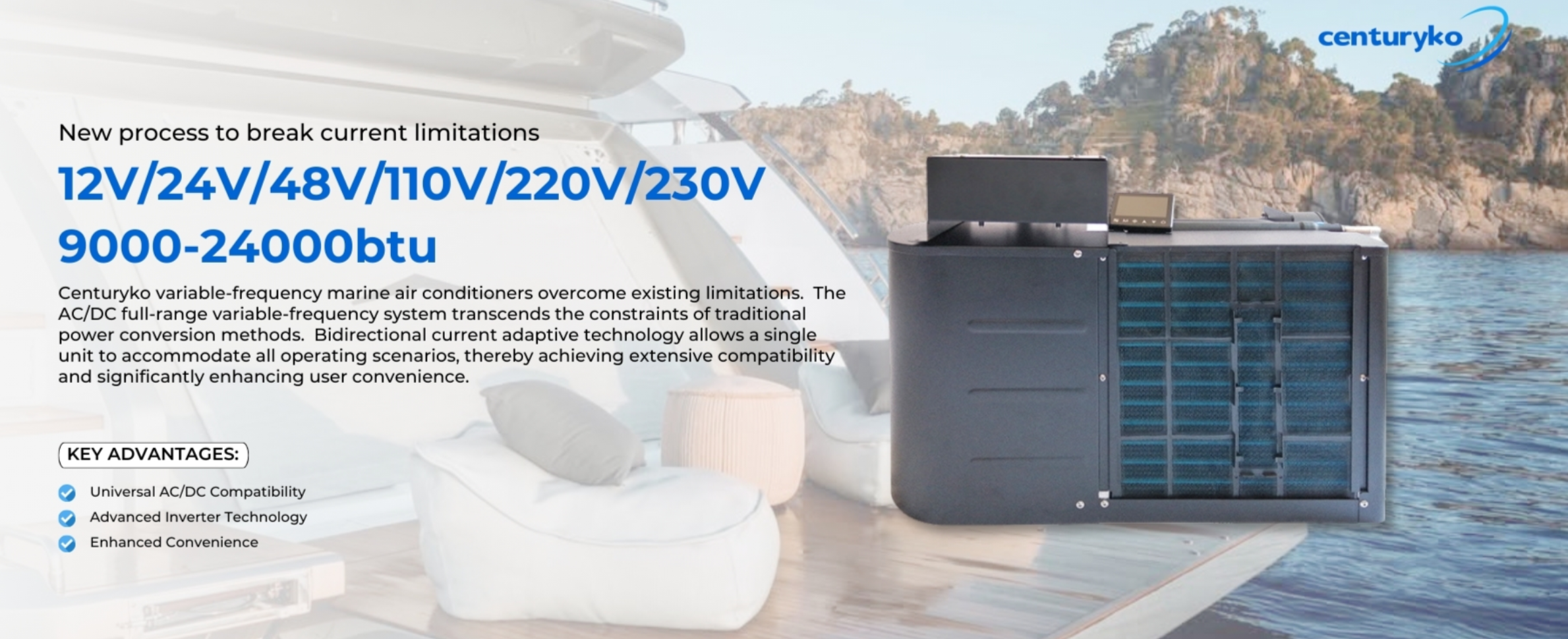
Why fleet managers want this — fast and practical
Fleet managers juggling schedules, crew comfort, and emissions targets are hunting for wins that actually move the needle. Upgrading to optimized DC-driven boat air conditioners gives measurable fuel savings, reduces genset runtime, and eases shore-power transitions. Suppliers like marine hvac manufacturers are already shipping modular inverter packs and variable-speed compressors tailored to rosters and duty cycles, so the tech is ready for real-world deployment.
Operational reality: constraints, metrics, and a real-world anchor
Ports and regs matter. The IMO initial strategy (2018) and electrification pilots at places like the Port of Los Angeles have pushed operators to quantify onboard electrics and cooling loads. On a 50-crew ferry, trimming AC genset hours by 20% can cut scope 1 emissions and lower fuel spend quickly. Key hardware terms to know here: inverter, DC bus, compressor, heat exchanger, COP and BTU — these define performance and how much electrical draw cooling actually needs. Integrating telemetry into the DC bus lets managers see COP trends in live time, not just after the trip log is closed.
User-centric optimization workflow
Run a tight loop: measure, model, retrofit, monitor. Start with load mapping during representative routes, logging cabin and equipment BTU demand, ambient sea temp, and compressor duty cycles. Model those results against inverter efficiency curves and expected COP at different setpoints. Retrofit with variable-speed compressors and intelligent thermostats that adapt to occupancy profiles. Finally, feed everything into a fleet dashboard that highlights genset runtime reductions and shore-power readiness. For hands-on support and installations, coordinate with a trusted marine hvac manufacturers partner or schedule a vetted marine air conditioner service to validate commissioning and seasonal tuning.
Hardware choices and trade-offs
There’s no single “best” unit — only the right one for your profile. Air-cooled units save space but lose peak efficiency in hot climates; water-cooled heat exchangers hold steady efficiency but demand hull plumbing and maintenance. Variable-speed compressors win for partial-load ops because they improve COP across a wide envelope. Battery-backed DC bus setups let AC run off stored energy during port hours, but that raises capital spend and weight. Think in terms of lifecycle cost, not sticker price. — Don’t skip integration testing; controllers that don’t talk to the vessel’s BMS create invisible losses.
Common mistakes and practical alternatives
Teams often overspec capacity “just to be safe,” which drives short-cycling and kills COP. Others retrofit incompatible inverters that introduce harmonics and stress compressors. A smarter path: right-size using empirical load maps, choose matched inverter-compressor pairs, and plan preventive marine air conditioner service intervals aligned with operating seasons. Alternatives include hybrid chiller systems that combine DC-driven compressors with heat recovery for galley or freshwater preheating — adds complexity but boosts overall shipboard energy yield.
Operational checklist — keep the crew comfortable without burning fuel
Concrete actions to adopt now:
– Baseline: log BTU demand across representative voyages and peak ambient conditions.
– Retrofit: select variable-speed compressors matched to your inverter and DC bus architecture.
– Commission: verify COP at multiple setpoints and confirm heat exchanger performance under load.
– Monitor: stream runtime and COP to fleet dashboards and set alarms for abnormal harmonic distortion.
Three golden rules for choosing the right strategy
1) Align performance metrics to mission profiles — prioritize COP at typical partial loads, not just peak BTU claims. 2) Validate integration: make sure inverter firmware, compressor controls, and the vessel BMS exchange state-of-charge and runtime data with low latency. 3) Balance capex and ops by modeling fuel saved versus installation cost across a 5–8 year horizon; include scheduled marine air conditioner service in that model so downtime and maintenance aren’t surprises.
Fleet upgrades that cut emissions while keeping crew comfortable are practical, measurable, and repeatable — and that’s where ZhuoliMarine comes in as a natural partner for design, retrofit, and long-term support: ZhuoliMarine. —