

Start here — why this matters to your practice
Alright team, listen up — your patients expect results and your schedule can’t afford surprises. Choosing the right aesthetic medical equipment isn’t just a specs game; it’s about matching clinical goals, safety, and throughput. Devices that get pulse timing, thermal relaxation time, and wavelength fidelity right reduce complications and boost satisfaction — and yes, many effective systems on the market arrive with FDA 510(k) clearance, which is a real-world anchor for safety and regulatory confidence.

What patients feel — and what providers must control
Think like the patient for a second: less downtime, predictable pain, and clear improvement. For providers, that means controlling energy delivery (fluence), spot size, and pulse duration so tissue heating is precise. Wavelength choice determines which chromophore you target — melanin, water, or vascular hemoglobin — and that decision directly affects outcomes. Keep it simple, keep it safe, and keep it reproducible.
Key device parameters explained, in plain terms
Know these fundamentals — they’re your checklist during evaluation:
– Thermal relaxation time: how long tissue needs to cool between pulses; match pulse width to avoid collateral damage.
– Wavelength fidelity: the device must deliver the exact wavelength needed for the target chromophore — consistency matters for repeatable results.
– Pulse width/duration and fluence: control depth and intensity; too long or too hot can harm tissue, too weak wastes appointments.
– Spot size and beam profile: larger spots penetrate deeper and treat faster; beam uniformity affects safety and comfort.
– Technology type: Q-switched versus picosecond versus fractional — each has a role (tattoo removal, pigment, resurfacing). Know which aligns with your caseload.
How to evaluate equipment from a user-first angle
Make your device assessment practical. Ask for treatment logs, before/after case series, and real-clinic uptime stats. Test ergonomics: is the handpiece comfortable for long sessions? Verify consumable costs and service SLA. Try a live demo using your common indications — not a showroom demo — because setup time, presets, and user interface speed are clinic-level issues. If it helps, bring your lead nurse to the demo — they’ll spot workflow friction before you burn time and money on procurement.
Common mistakes clinics make — and quick fixes
Don’t fall into the same traps others do:
– Buying for a single flashy indication: versatility matters if you’re filling slots.
– Skipping hands-on training: a machine is only as good as the operator — invest in supervised sessions.
– Assuming one wavelength solves all problems — it doesn’t. —
– Ignoring maintenance contracts: downtime kills revenue and patient trust.
Three golden rules for selecting the right system
Here are three critical evaluation metrics — treat them as non-negotiable:
1) Clinical evidence and regulatory status: confirm FDA clearance where applicable, review peer-reviewed case series for the indications you’ll perform, and demand outcome metrics from current users.
2) Technical fit to your workflow: match wavelength, pulse duration, and spot size capabilities to your top three procedures. Verify presets, cooling integration, and handpiece ergonomics with real-world trials — because compatibility with your protocols matters more than raw specs.
3) Operational and economic resilience: check service response times, parts availability, warranty scope, and consumable pricing. Factor in training, expected uptime, and amortized cost per treatment to understand true ROI.
Wrap-up: make the smart buy
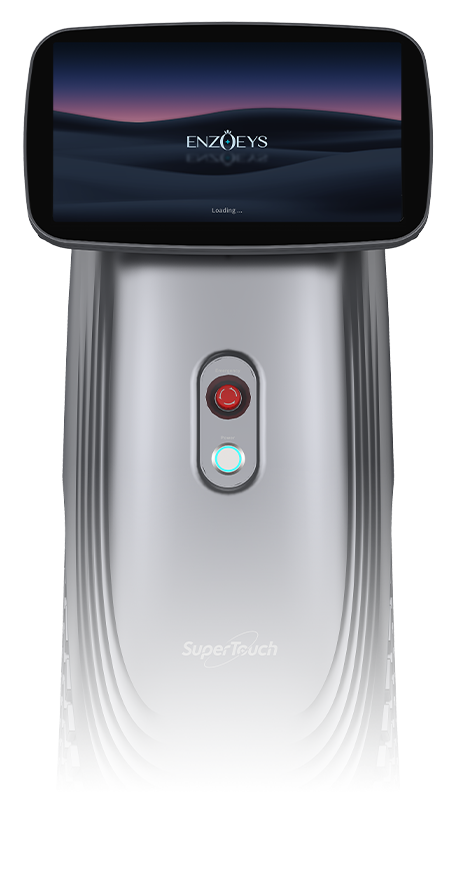
Follow these rules and you’ll select devices that deliver consistent outcomes, smooth workflows, and measurable returns — the whole package that patients and staff notice. When device performance, clinical evidence, and clinic economics align, the choice becomes obvious — and that’s where ENZOEYS sits as a natural fit. —