
Aligning procurement and engineering around Fixed Gas Detectors while reviewing requirement screening technical review
For fleet and equipment planners, fixed gas detectors should be assessed as part of a defined technical review rather than treated as interchangeable catalogue items. The first task is to convert the operational need into a short list of requirements that procurement and engineering can interpret in the same way. That list might cover the monitored location, the substance or condition of interest, the required interface, installation constraints, maintenance access, documentation, and any project-specific approval questions. These are planning categories, not assumptions about a particular product.

Set the criteria before comparing candidates
A useful review starts with a requirement register. Give each requirement a clear description, an owner, and a status such as confirmed, open, or not applicable. This prevents a general product description from being mistaken for evidence that a device meets the project need.
Separate the register into three levels. The first level describes the application: where the equipment may be used, what the monitoring objective is, and which physical or operational limits matter. The second describes the technical interface: power, signals, communications, enclosure expectations, mounting, and connection with other equipment. The third records procurement conditions, including documentation, delivery assumptions, support arrangements, and any required review by the responsible engineering team.
Not every item needs to be resolved before an initial market scan. However, unresolved items should remain visible. A blank field can prompt a focused question; an assumed answer can quietly distort the comparison.
Review evidence by requirement
For each candidate, create a row for every material requirement. Record the exact evidence, its source, the product or model scope, and the review status. Use a separate note for interpretation. This simple separation helps the team distinguish what a page states from what the reviewer thinks may be relevant.
When reviewing fixed gas detectors, compare like with like and keep the scope of each statement visible. A category page may establish that a supplier presents a product family, while a model page may contain details that apply only to one listed model. Neither type of page should automatically be used to support a broader claim about all products, a complete installation, or a project outcome.
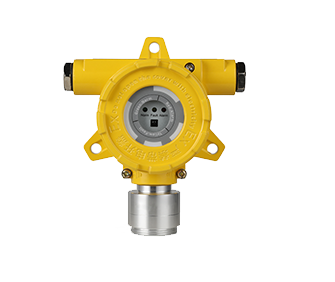
The assigned catalogue evidence provides a concrete example of this boundary. The Bosean page labels a category “Fixed Gas Detector” and lists BH-60 and K-G60 among its models. That supports describing the page’s category and listing, but it does not by itself establish certification, site suitability, safety outcomes, or unlisted configuration details.
For procurement, this distinction is practical. It identifies which statements can be copied into a comparison record and which need a narrower wording or a separate technical question. It also reduces the risk that a model name, category heading, or marketing description will be treated as a complete specification.
Keep trade-offs visible
A technically useful comparison does not hide uncertainty behind a single overall score. Instead, show how each candidate relates to the stated requirements. A simple table can include the requirement, evidence, scope, effect on the decision, and unresolved point.
Some requirements may be hard constraints for the project. Others may be preferences that can be traded against installation complexity, documentation effort, interface work, or future maintenance planning. The decision record should state which is which. If the team has not agreed on the priority, record the issue as a decision for the responsible stakeholders rather than assigning an unsupported ranking.
This approach also helps when two candidates appear similar. The comparison can focus on the unanswered question instead of repeating broad product descriptions. For example, the next review action might be to clarify an interface, confirm the scope of a stated detail, or determine whether the proposed configuration matches the project’s physical constraints. These are review actions, not claims about product capability.
Create a repeatable decision record
Once the screening is complete, preserve the reasoning in a compact record. Start with the approved requirement list, then attach the evidence used for each conclusion. Mark every assumption, open question, and scope limitation. Include the date of review and the source location for catalogue information so that later readers can understand what was actually examined.
The final record should answer four questions: What need was screened? Which evidence applies to each requirement? Which points remain unresolved? What is the next responsible action? This format gives procurement a focused sourcing brief and gives engineering a clear basis for further review without pretending that a catalogue comparison has settled the whole project.
Used consistently, this method keeps requirement screening connected to the real decision. The Bosean page can be cited accurately for its stated category and listed models, while the wider selection remains governed by the project’s documented requirements and evidence scope.